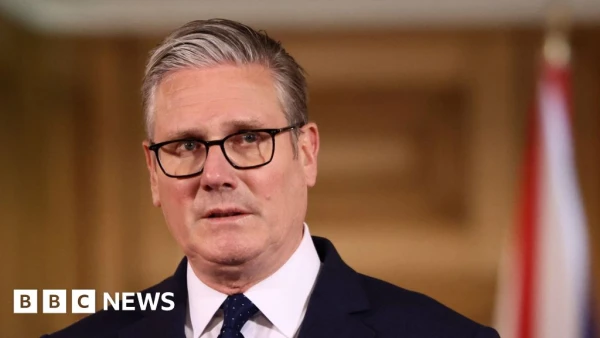
In a volatile period, domestically and internationally, Prime Minister Sir Keir Starmer has sought to differentiate himself from critics within his own party and beyond, arguing for stability in governance.
During a BBC interview, Starmer emphasized his vision of a "decent, tolerant, diverse Britain" that he believes is under threat like never before. He addressed the recent attack on two Jewish men in Golders Green, ongoing pro-Palestinian protests, and the broader implications of the Iran war, which he compared in magnitude to the pandemic and Brexit.
Starmer hinted at the need for tighter protest regulations, citing the "cumulative" impact of repeated marches on Jewish communities. He also made his strongest pro-European remarks to date, advocating for the UK to be "much closer to the EU" on defense, security, energy, and the economy, while ruling out rejoining the single market or customs union.
However, his leadership faces scrutiny amid reports of potential challenges from Health Secretary Wes Streeting and Greater Manchester Mayor Andy Burnham. The Prime Minister's fate may hinge on whether his party and the electorate allow him to navigate these turbulent times.