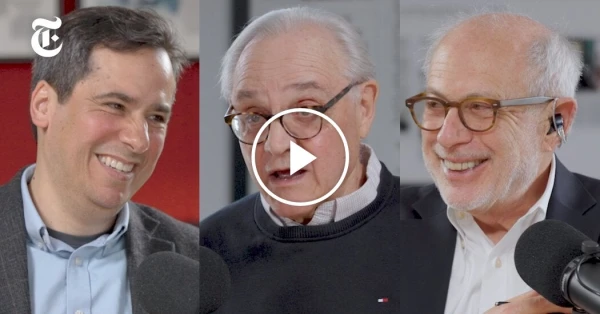
In a recent panel discussion, foreign policy analysts examined the United States' military engagement in Iran, concluding that the conflict represents a significant strategic failure for American interests.
E.J. Dionne, a political commentator, argued that the war has weakened the United States on multiple fronts. "If you go down the list, Trump shattered our moral standing with his threats to wipe out Iran's civilization," Dionne stated. "We weakened our already shaky alliances with NATO and the Gulf states. This war was ill thought through at the beginning, in the middle, and at the end."
Carlos Lozada, another analyst, echoed these concerns, describing the conflict as a failure despite American military superiority. "When you launch a war of choice, which is what this was, and you expend great resources and you lose brave, precious lives in the process and you don't meet your objectives, to me that sounds like a failure," Lozada said. "It doesn't matter how many targets you destroy, it doesn't matter how many layers of leadership you're able to kill."
The discussion expanded beyond the immediate conflict to address broader questions about America's role in global affairs. Lozada argued that while American power remains substantial, the country's legitimate exercise of that power is diminishing.
"For eight decades after World War II, the United States created and nurtured and led a system of alliances and institutions that not only promoted and served American values and interests, but also prevented major conflicts from breaking out among the great powers," Lozada explained. "That system—the Pax Americana—is vanishing because it was based not just on power, but on legitimacy and trust. And that trust is eroding."
Dionne added that the current administration appears to be abandoning traditional democratic allies while embracing authoritarian regimes. "Under Trump, the country has really switched sides on the question of the free world," he observed. "Our national security strategy explicitly endorses right-wing authoritarian parties in Europe, and Vice President Vance was campaigning for Viktor Orbán in Hungary."
The panelists agreed that unilateral actions in Iran and elsewhere have damaged America's standing as a global leader, raising fundamental questions about the future of international relations in an increasingly multipolar world.