The Canadian government has received over 12,000 applications from people seeking to reclaim their Canadian citizenship under a new law that extends the right to anyone who can prove ancestral ties, regardless of generation. The influx has already overwhelmed immigration officials and genealogists, raising questions about whether the system is prepared for the potential millions of eligible applicants.
The law, effective December 2025, corrects a historical inequity that made it difficult for Canadians living abroad to pass citizenship to children born overseas. Between December 15 and January 31, 12,430 applications were submitted, with 6,280 processed and 1,480 granted.
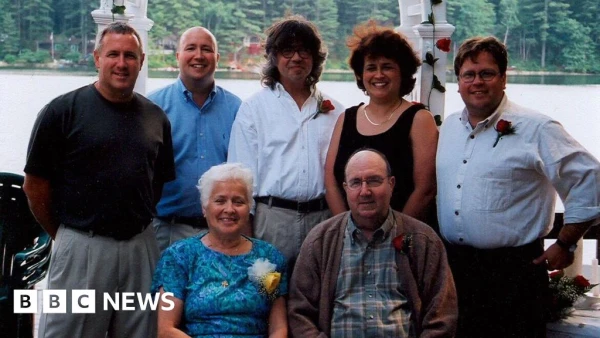
For many applicants, including Joe Boucher of Maine, the timing is significant. “We sort of feel the ground shifting under our feet a little bit these days,” Boucher said, referencing political changes in the U.S. “It’s nice to know that the connectivity to the home country, as it were, is there.”
Boucher and others are not applying for citizenship but for “proof” of citizenship, which costs C$75. However, genealogical research, record fees, and legal costs can push the total into thousands of dollars.
Genealogist Ryan Légère, based in Montreal, says his side business has become full-time, and he may need to hire help. He warns that many institutions are “overwhelmed, understaffed, and not fully prepared for the volume of requests.”
Applicants face challenges like non-standardized records—Quebec birth certificates weren’t standardized until the 1990s—and surname changes due to anglicization. A Desjardins might become Gardner; a Bonenfant, Goodchild.
Immigration, Refugees and Citizenship Canada says each application is reviewed case-by-case, and online genealogy sites are not accepted as sole proof. Eligible ancestors must trace back to a parent who became a Canadian citizen on or after January 1, 1947.
While millions could qualify, most applicants may not relocate. Tim Cyr, another Mainer with French-Canadian roots, seeks dual citizenship as a “safety net” but doesn’t plan to move. Boucher also hesitates, saying his life—including three children and extended family—is in the U.S., though he has “fantasized about living there for many years.”
Still, for many, the pursuit is about identity, not escape. As Boucher put it, “My ancestors arrived in Canada 400 years ago and spent generations creating communities… This is in large part who I am.”