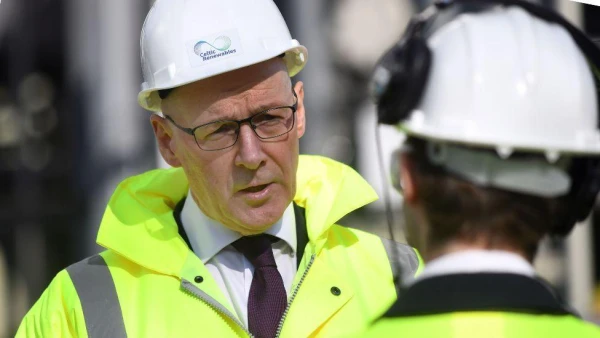
First Minister John Swinney has indicated a notable change in position regarding new oil and gas exploration in the North Sea, citing heightened concerns over energy security as global oil prices surge.
Speaking during campaign activities in Edinburgh ahead of next month's Holyrood election, Swinney stated that the ongoing conflict in the Middle East has made energy security a "more significant" factor in decisions about North Sea drilling. While maintaining that any new projects must comply with climate compatibility assessments, he emphasized the need to consider "energy security for households and businesses in Scotland."
"The war in Iran and the consequential threat to the UK's energy supply has changed the balance of arguments about North Sea drilling," Swinney said during a recent podcast appearance.
The Scottish government previously established a presumption against licensing new offshore fossil fuel developments in 2023. However, Swinney repeatedly declined to confirm whether the Scottish National Party remains committed to that position, creating uncertainty about the party's stance just weeks before the election.
Oil prices have skyrocketed following escalating tensions in the Middle East, with Brent crude oil climbing from approximately $70 in late February to over $100 by late March. This spike comes after the Strait of Hormuz—a crucial shipping channel for global energy supplies—effectively closed due to military conflict involving the United States, Israel, and Iran.
While licensing authority for North Sea exploration rests with the UK government, which has historically opposed new developments, that opposition has softened in recent months. The Labour government has granted permission for drilling near existing fields and is currently considering final approval for two major projects: Rosebank and Jackdaw.
Rosebank, located about 80 miles northwest of Shetland, represents Britain's largest untapped oil field and would also produce gas. Jackdaw, situated approximately 150 miles east of Aberdeen, is a gas field that could connect to the UK network within months. Both projects face legal challenges from environmental groups that have temporarily halted extraction efforts.
Political reactions to Swinney's shifting stance have been mixed across party lines. Scottish Green co-leader Ross Greer criticized the move, asserting that "increasing dependence on oil and gas would weaken the country's energy security" and advocating instead for a transition to "clean, green renewable electricity."
In contrast, Scottish Conservative leader Russell Findlay called for aggressive drilling expansion with his "drill baby drill" slogan, arguing that uncertainty over UK policy has cost jobs despite supporting a long-term shift to renewables. Labour's Anas Sarwar advocated for a "balanced approach" incorporating oil, gas, renewables, and reconsideration of nuclear power restrictions.
The policy shift comes as Swinney's government failed to publish a finalized energy strategy before parliament dissolved for elections. The last draft plan from 2023 included the presumption against new oil and gas developments, creating a contrast with Swinney's current emphasis on energy security considerations.