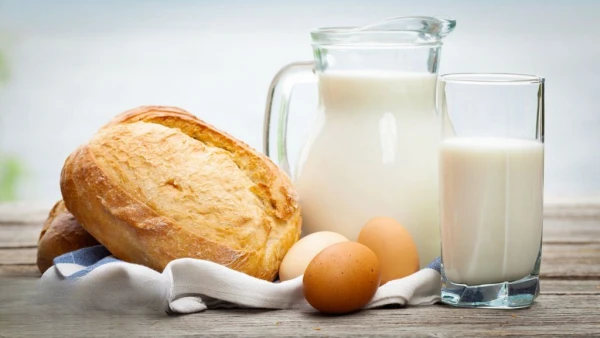
Whether you're a meticulous budgeter or a casual shopper, you've likely noticed that the same weekly staples now cost significantly more than they did a few years ago. A carton of six eggs, a jug of milk, and a loaf of bread have all climbed in price, and the reasons go beyond simple inflation.
The Price of Eggs: From £1 to £1.80
In 2022, a pack of six own-brand free-range eggs cost just £1 on average at major UK supermarkets. Today, that same pack rings up at £1.80, according to market research firm Assosia. The jump stems from the UK's worst avian flu outbreak between 2021 and 2023, which led to the culling of millions of hens. This reduced the number of laying hens and, combined with higher energy costs for indoor housing, created shortages. Supermarkets limited egg purchases, and both producers and retailers raised prices to cover losses.
A significant portion of egg production costs goes to grain for feed, heating, and transportation. Ukraine, a major grain supplier, saw prices spike after Russia's 2022 invasion, and the war also drove up energy costs globally. Demand remains high due to the popularity of high-protein diets, keeping pressure on prices.
Milk: Energy-Intensive and Volatile
A four-pint bottle of semi-skimmed milk cost £1.29 in 2022 but now averages £1.65. Dairy production is energy-heavy, and the post-Ukraine energy crisis hit hard. However, milk price rises have eased recently because of a global oversupply. Dairy farmers are now being paid 25% less per litre, with many operating at a loss, according to agricultural analysts The Andersons Centre.
Bread: Stabilising After Ukraine Shock
A basic loaf of medium-sliced white bread rose from 65p in 2022 to 74p today. The price of wheat surged after Russia's invasion of Ukraine, but bread prices have since stabilised. Still, conflict in the Middle East has sparked new supply fears, which could affect future costs.
Why Are Prices Still High?
Producers' costs have risen 7.7% in the year to April, far outpacing the 4% increase in what they charge retailers. Much of this is due to fixed contracts that lock in prices, leaving farmers and producers to absorb sudden spikes in energy or fuel costs. "Without a crystal ball, nobody can know what's going to happen," says Danni Hewson of AJ Bell.
Are Supermarkets Profiteering?
It might seem that supermarkets are cashing in, but data shows otherwise. While sales at major UK grocers rose from £130bn to £160bn between 2020 and 2024, profit margins haven't increased in two decades. The Competition and Markets Authority found no evidence of artificial price inflation during the 2022-2023 food price surge. Hewson notes that the sector is "massively competitive," with many staples sold at a loss to attract customers. Andrew Opie of the British Retail Consortium emphasises that the UK remains "one of the most affordable places in Western Europe for grocery shopping," and supermarkets often absorb cost increases to deliver value.