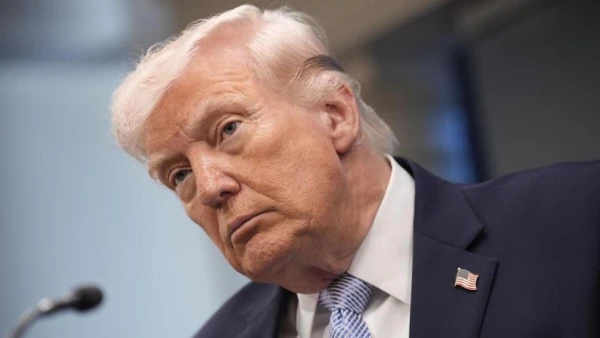
President Donald Trump announced a two-week ceasefire with Iran late Tuesday, narrowly avoiding a threatened massive U.S. military strike that had been scheduled for just hours later.
At 6:32 PM Washington time, Trump declared on his social media platform that the U.S. and Iran were "very far along" with a "definitive" peace agreement. The temporary halt in hostilities came just 88 minutes before Trump's self-imposed 8:00 PM deadline to launch strikes against Iranian energy and transportation infrastructure.
"All of this is contingent on Iran also suspending hostilities and fully opening the Strait of Hormuz to commercial shipping traffic, which it says it will do," the president stated.
This breakthrough followed Trump's extraordinary threat earlier in the day, when he warned of the potential destruction of Iranian civilization—language unprecedented for a modern American president. Whether this rhetoric pressured Tehran into accepting a ceasefire they had previously rejected remains unclear, but the inflammatory declaration has already reshaped international perceptions of U.S. leadership.
"A nation that once styled itself as force for stability around the globe is now shaking the foundations of the international order," observed political analysts. "A president who has seemingly relished shattering norms and traditions in domestic politics is now doing the same on the world stage."
Domestic reaction was swift and divided. Congressional Democrats condemned Trump's threats, with some calling for his removal from office. Senate Democratic leader Chuck Schumer warned that any Republican not voting to end the conflict would "own every consequence of whatever the hell this is."
Even within Trump's own party, support was far from unanimous. Republican Congressman Austin Scott, a senior member of the House Armed Services Committee, told reporters: "The president's comments are counter-productive, and I do not agree with them."
Wisconsin Senator Ron Johnson, typically a Trump loyalist, cautioned that following through with the bombing campaign would be a "huge mistake." Alaska Senator Lisa Murkowski added that the president's threat "cannot be excused away as an attempt to gain leverage in negotiations with Iran."
The White House, however, maintains that the aggressive approach produced results. In his ceasefire announcement, Trump claimed the U.S. had "met and exceeded" all military objectives, noting significant degradation of Iran's military capabilities and elimination of many top leaders.
Yet critical questions remain unresolved. The status of Iran's enriched uranium—the foundation of its nuclear weapons program—is unknown. Tehran continues to wield influence over regional proxies like Yemen's Houthi rebels. And while Iran has pledged to open the Strait of Hormuz, its statement emphasized this would occur "via coordination with Iran's armed forces."
Iranian Foreign Minister Seyed Aragchi revealed that Washington had accepted the "general framework" of Tehran's 10-point peace plan, which includes U.S. military withdrawal from the region, lifted economic sanctions, war compensation payments, and Iranian control over the strategic waterway. These conditions suggest the coming negotiations will be particularly challenging.
For now, Trump has achieved a temporary political victory through dramatic brinkmanship. But as one analyst noted, "The ceasefire is a reprieve, not a permanent settlement. The long-term cost of the president's words and actions, and of the war overall, has yet to be fully assessed."