U.S. President Donald Trump announced on Friday that he will raise tariffs on cars and trucks imported from the European Union to 25% next week, accusing the bloc of failing to uphold its commitments under a previous trade agreement.
The deal, reached last summer, had capped U.S. tariffs on EU autos and parts at 15%, lower than the 25% duty Trump imposed on many other trading partners. These sector-specific duties were unaffected by a Supreme Court ruling earlier this year that struck down a broad range of Trump's global levies.
In a post on his Truth Social platform, Trump wrote: "Based on the fact the European Union is not complying with our fully agreed to Trade Deal, next week I will be increasing Tariffs charged to the European Union for Cars and Trucks coming into the United States. The Tariff will be increased to 25%."
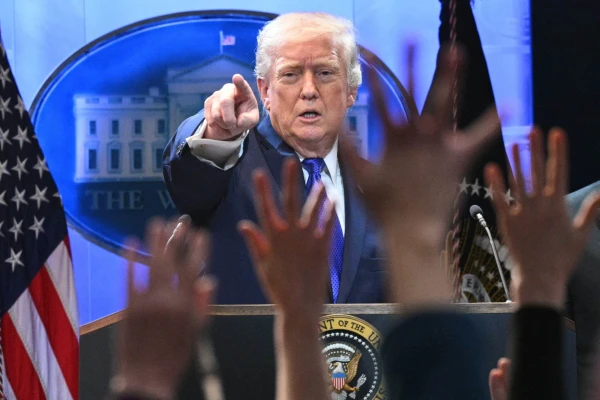
Speaking later at an event in Florida, Trump said the U.S. had informed Germany of the threat, accusing German automakers like Mercedes-Benz and BMW of "ripping off" Americans. He also criticized German Chancellor Friedrich Merz, telling him to focus on ending the war in Ukraine instead of "interfering" on Iran.
Germany, a major exporter of vehicles to the U.S., would likely be hit hard by the tariff hike.
A European Commission spokesperson responded: "Should the US take measures inconsistent with the joint statement, we will keep our options open to protect EU interests." The spokesperson added that the bloc is implementing its commitments "in line with standard legislative practice" and keeping the Trump administration informed.
Last July, the EU prepared a list of U.S. goods that could be targeted for retaliation if talks failed.
Former U.S. trade official Wendy Cutler, now at the Asia Society Policy Institute, said Trump "has clearly lost patience with EU efforts to implement its commitments... He appears to be hoping to light a fire under Brussels to accelerate its domestic procedures." She noted similarities to a previous move against South Korea.
In late March, EU lawmakers conditionally approved the tariff deal with the U.S., but the agreement still requires negotiation with EU member states before implementation.