President Donald Trump asserts that past presidents routinely ignored the 1973 War Powers Resolution, which requires congressional approval for prolonged military engagements. However, history shows a mixed record.
On Friday, as a 60-day deadline for U.S. operations in Iran expired, Trump argued that his predecessors considered Congress's war powers authority "totally unconstitutional." He stated, "So many presidents, as you know, have gone and exceeded it. It's never been used. It's never been adhered to."
The 1973 law mandates that the president must terminate any armed forces deployment within 60 days of notifying Congress unless lawmakers vote to authorize it. The clock started on February 28 when the administration notified Congress of strikes against Tehran. Trump and Defense Secretary Pete Hegseth contend that the current ceasefire pauses the clock, a claim that experts dispute.
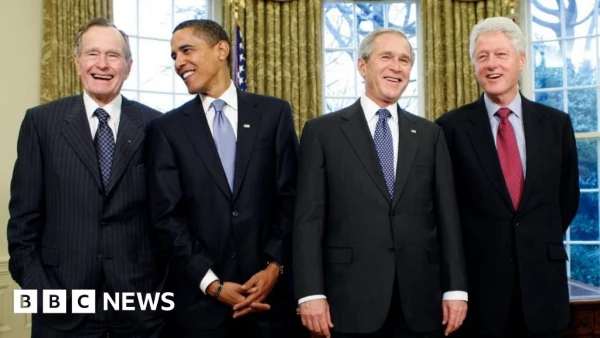
Indeed, some past presidents sought congressional approval. In 1983, Ronald Reagan received authorization for deploying U.S. Marines in Lebanon within the 60-day window. George H.W. Bush obtained Congress's green light for the 1991 Gulf War, though he argued it wasn't required. George W. Bush secured authorization for wars in Afghanistan (2001) and Iraq (2003).
Yet Trump is correct that others skirted the law. Bill Clinton's 1999 bombing campaign in Kosovo exceeded the 60-day limit without congressional approval, lasting 78 days. Barack Obama argued the 2011 Libya intervention didn't constitute "hostilities" under the law and continued past 60 days without approval; the operation lasted over seven months.
David Schultz, a professor at Hamline University, told the BBC, "Just because other presidents haven't invoked it doesn't mean that what Trump is doing here is correct. Trump has basically committed us to combat without any support from Congress."
Trump has noted the Iran hostilities are brief compared to Vietnam, Iraq, World War II, and Korea. But with deadlock over the Strait of Hormuz and Iran's nuclear program, the path to ending the conflict remains unclear. As Obama remarked in 2014, "It's harder to end wars than it is to begin them."