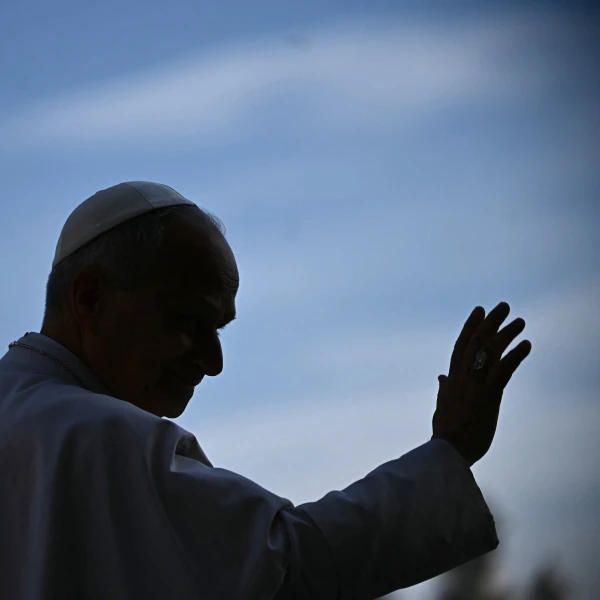
In a series of pointed statements over the past year, Pope Leo XIV has challenged political leaders on moral grounds, criticizing harsh immigration policies and calling for peace amid international conflicts. The pontiff's Easter message urged those with power to "choose peace," while earlier remarks questioned whether inhumane treatment of immigrants aligns with pro-life values.
President Donald Trump responded forcefully on Sunday, accusing the pope of being "weak on crime and terrible for foreign policy" in a lengthy social media post. The president suggested Leo XIV was elected specifically as "a counterweight" to his administration, a claim disputed by church leaders involved in the papal selection process.
Cardinal Joseph Tobin of Newark acknowledged the pope "is not one to back down if the cause is just," but seven cardinals involved in the conclave have stated the election focused on church unity rather than creating opposition to any political figure.
"The pope's statements aren't partisan barbs; they are expressions of his understanding of the Gospel and Catholic social teaching," observed one Vatican analyst.
Pope Leo's positions reflect longstanding Catholic doctrine. His immigration stance draws from Matthew 25:35's call to welcome strangers, while his peace advocacy follows the church's just war theory, which traces back to Saint Augustine. Cardinal Robert McElroy of Washington has noted the current conflict with Iran fails to meet traditional just war criteria, as the U.S. wasn't responding to "an existing or imminent and objectively verifiable attack."
The exchange highlights tensions between spiritual leadership and political authority, with the pope's moral pronouncements being interpreted through both theological and political lenses. As the leader of over a billion Catholics worldwide, Pope Leo XIV continues to apply centuries-old church teachings to contemporary global challenges, while political figures navigate how to respond to religious authority in the public sphere.