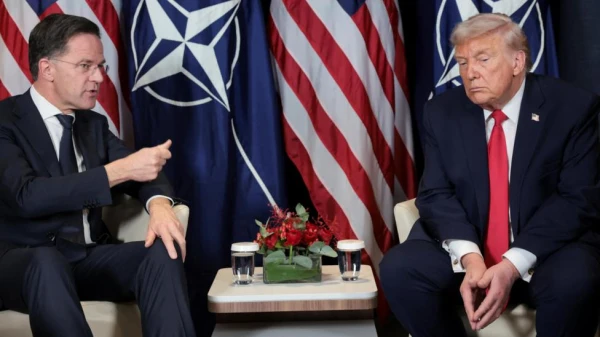
Former President Donald Trump has launched a fresh broadside against NATO, accusing the alliance of abandoning the United States during the Iran conflict, following a private White House meeting with Secretary General Mark Rutte that was described as "very frank."
In a Truth Social post after Wednesday's meeting, Trump declared: "NATO WASN'T THERE WHEN WE NEEDED THEM, AND THEY WON'T BE THERE IF WE NEED THEM AGAIN." The post also referenced his longstanding frustration with Greenland, calling it "THAT BIG, POORLY RUN, PIECE OF ICE!!!"
Rutte characterized the discussion to CNN as "very frank" and "very open," acknowledging clear disagreements while attempting to present a more nuanced picture of European support. He noted that "the large majority of European nations has been helpful with basing, with logistics, with overflights" during the conflict.
White House Press Secretary Karoline Leavitt reinforced Trump's position, stating that NATO was "tested and they failed" and that member countries had "turned their backs on the American people." She confirmed the president would have a "very frank and candid conversation" with the NATO chief.
The meeting came amid escalating tensions, with Trump reportedly considering withdrawing from the 32-member alliance after several NATO countries resisted his calls to help reopen the Strait of Hormuz to ease global oil prices. The Iran war has amplified Trump's longstanding grievances with NATO, creating what analysts describe as the alliance's greatest challenge in its history.
Despite the friction, Rutte credited Trump's "leadership" in degrading Iran's nuclear threats and stated that NATO members do not view the war as illegal. He emphasized that most agreed on the importance of countering Iran's nuclear capabilities.
"It's therefore a nuanced picture," Rutte told CNN, attempting to bridge the divide between Trump's public criticism and what he described as substantial European support.
The relationship between the Trump administration and NATO was already strained before the Iran conflict, largely due to disagreements over Trump's interest in Greenland. However, the war has elevated tensions to unprecedented levels.
Legal constraints may complicate any withdrawal attempt, as Congress voted in late 2023 to prohibit any U.S. president from unilaterally leaving NATO without approval from two-thirds of the Senate or an act of Congress.
Whether Rutte's diplomatic efforts and personal rapport with Trump can salvage the relationship remains uncertain as the alliance faces its most serious crisis in decades.