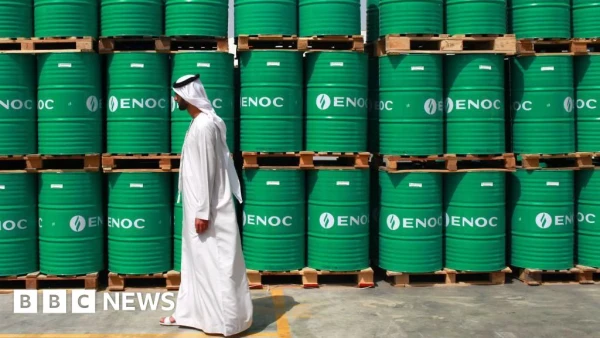
The United Arab Emirates has announced its abrupt departure from OPEC, a move that economics editor Faisal Islam calls a major turning point. The UAE had been a member even before becoming a nation in 1971.
OPEC, the organization of major oil-exporting countries, has historically controlled crude prices by adjusting production and quotas. While Saudi Arabia dominates, the UAE was the second most important swing producer, with significant spare capacity to ease prices. However, the UAE felt its OPEC quota—limiting it to 3-3.5 million barrels per day—forced disproportionate revenue losses.
The timing suggests ties to the Iran war and strained Saudi relations. The UAE may boost production to 5 million barrels per day, potentially triggering a Saudi price war that could hurt poorer OPEC members. Emirati officials are planning new pipelines bypassing the Strait of Hormuz to the port of Fujairah.
OPEC's influence has waned, controlling about 50% of traded oil today versus 85% in the 1970s. The UAE's exit could trigger further departures. Former Saudi Oil Minister Sheikh Yamani famously said, "The Stone Age did not end because the world ran out of stones," hinting at a future where oil is substituted. China's electrification has already cut oil demand by 1 million barrels per day.
For now, the Strait of Hormuz blockades dominate markets, but the UAE's move could reshape the post-war landscape, unshackling Emirati production and potentially driving prices toward $50 per barrel next year.