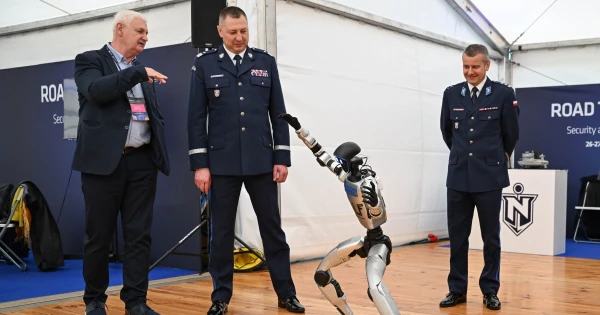
Remote-controlled weapons have been a reality for years, but the front lines in Ukraine are now witnessing a new and troubling shift: artificial intelligence is on the verge of making autonomous decisions about when to fire.
While drones and unmanned ground vehicles have long been operated by humans at a safe distance, the next generation of robot soldiers is being programmed with AI that can identify targets and potentially open fire without direct human input. Ukraine has become a proving ground for these systems, as both sides race to deploy ever more autonomous technology.
Experts warn that the move toward AI-driven lethal decision-making raises profound ethical and strategic questions. "What happens when a machine misidentifies a civilian as a combatant?" asks Dr. Olena Petrov, a military ethicist. "The speed and scale of potential mistakes could be catastrophic."
Ukrainian officials confirm they are testing semi-autonomous drones that can lock onto and track targets, but insist a human remains in the loop for the final strike. However, as electronic warfare degrades communications, the temptation to give AI full authority grows.
NATO and other world powers are watching closely. The outcomes of these experiments in Ukraine may well determine the rules of engagement for future conflicts worldwide.