President Donald Trump has issued an ultimatum to Iran, threatening to escalate attacks on the country's infrastructure unless a peace agreement is reached by Tuesday night. In a stark warning, Trump vowed to bomb Iran "back to the Stone Ages" and claimed on social media that "a whole civilization will die tonight" without a deal.
Over the past two weeks, coordinated U.S. and Israeli strikes have systematically targeted essential civilian facilities across Iran. BBC Verify has confirmed attacks on at least two major steel plants, three bridges, and a pharmaceutical manufacturing center, causing widespread disruption to daily life and the economy.
Critical Infrastructure Under Fire
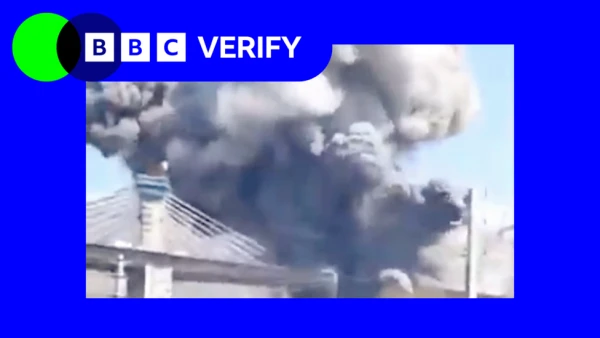
One of the most devastating attacks occurred last Thursday when U.S. aircraft destroyed a bridge under construction in Karaj, killing at least 13 people. Verified footage shows a massive gap in the structure with construction cranes standing idle on either side. Trump later celebrated the destruction online, writing: "The biggest bridge in Iran comes tumbling down, never to be used again."
Iran's industrial backbone has suffered severe blows, with strikes hitting the country's two largest steel producers. Satellite imagery reveals extensive damage at both the Isfahan Mobarakeh Steel Company and Khuzestan Steel Company, with local officials estimating repairs could take up to a year. Israeli Prime Minister Benjamin Netanyahu claims these attacks have disabled approximately 70% of Iran's steel manufacturing capacity.
"Steel is a cornerstone of Iran's non-oil economic capacity," said Arman Mahmoudian, research fellow at the University of South Florida's Global and National Security Institute. "If Israeli strikes have indeed dismantled around 70% of Iran's steel production capacity, this would place nearly 20 million tons of output at risk, potentially affecting around 3–3.5% of Iran's GDP."
The healthcare sector has also been impacted, with Israel Defense Forces striking the Tofigh Daru Research & Engineering Company, a major pharmaceutical producer of anesthetic and cancer drugs. While the IDF alleges the facility was involved in chemical weapons research, this claim remains unverified. Mahmoudian warns that targeting pharmaceutical production could undermine Iran's medical independence during a critical time.
Educational and Religious Sites Damaged
Recent strikes have extended beyond industrial targets to cultural and educational institutions. Verified images show significant damage at Tehran's Shahid Beheshti University and Sharif University of Technology following attacks on the capital. In the central city of Zanjan, parts of the Husseinya Mosque were leveled, destroying an attached clinic and library and killing two people.
Transportation networks have been systematically targeted as well. The IDF announced bombing ten "key" sections of Iran's railway system, with verified footage showing a collapsed railway bridge in Aminabad village. Iranian Red Crescent paramedics were documented evacuating injured individuals near railway lines in Karaj, though the cause of their injuries remains unclear.
One Tehran railway worker expressed frustration to the BBC: "I'm really angry. Everything is falling apart." The strikes followed an IDF warning in Farsi advising civilians against traveling on trains or near railway lines for their safety.
Growing War Crime Concerns
Legal experts and international officials are increasingly questioning whether these attacks violate international law. Professor Rachel VanLandingham, a former U.S. military lawyer, explained that while strikes on civilian sites are permitted under limited circumstances for military advantage, they cannot cause "excessive" harm to civilians.
UN spokesperson Stephane Dujarric emphasized on Monday that attacks causing "excessive incidental civilian harm" are prohibited. UN human rights chief Volker Turk stated unequivocally: "Deliberately attacking civilians and civilian infrastructure is a war crime."
Sir Geoffrey Nice, a former prosecutor at The Hague, warned that targeting essential infrastructure like power plants and water facilities likely violates proportionality requirements under international law.
"The civilian population in any war is entitled to be properly protected and if you interfere with the basic means of life… you are at grave risk of causing completely disproportionate damage, ultimately including by starvation and disease," he told the BBC.
Despite these concerns, Trump dismissed questions about potential war crimes during a Monday news conference, stating: "You know the war crime? The war crime is allowing Iran to have a nuclear weapon."
Independent conflict monitor Acled reports that 40 dual-use facilities—those producing both civilian and military products—have been hit since U.S.-Israeli strikes began on February 28. As the Tuesday night deadline approaches, the international community watches anxiously to see whether Iran will accept Trump's terms or face further escalation of attacks on its civilian infrastructure.