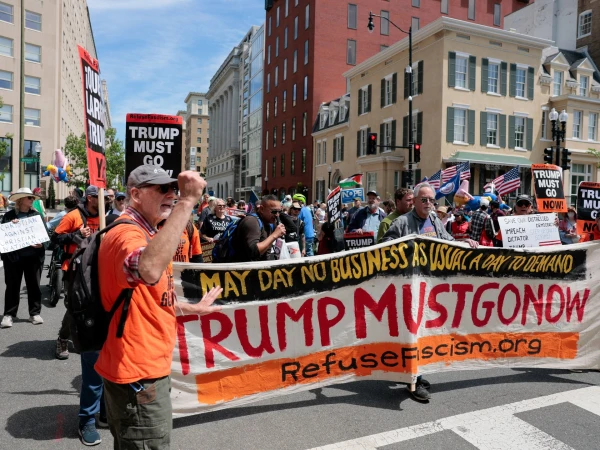
Tens of thousands of workers took to the streets across the United States on May Day, demanding sweeping reforms for working-class rights. Rallies in major cities including New York, Los Angeles, Chicago, and Washington D.C. called for higher wages, stronger labor protections, and an end to what protesters describe as corporate greed.
In a coordinated push, demonstrators chanted slogans like "Tax the rich" and "Abolish ICE," targeting the $70 billion proposed increase in immigration enforcement funding. Union leaders and progressive activists argued that the money would be better spent on healthcare, education, and housing.
"We are here to remind the government that the working class built this country, and we deserve a fair share," said Maria Gonzalez, a janitor and union organizer in Los Angeles. "They want to spend billions on deportation and walls. We need that money for our communities."
The May Day protests, rooted in the historic fight for an eight-hour workday, have grown into a broader call for economic justice. Many rallies featured speeches from immigrant rights advocates, climate activists, and labor leaders, stressing the intersectionality of their struggles.
In Chicago, hundreds gathered in Union Park, holding signs that read "Workers' Rights Are Human Rights" and "No Borders, No Nations, Stop Deportations." The crowd then marched through downtown streets, temporarily disrupting traffic.
Police presence was heavy but largely peaceful, with only minor scuffles reported in a few cities. Organizers are already planning follow-up actions for Labor Day, aiming to keep the momentum alive.