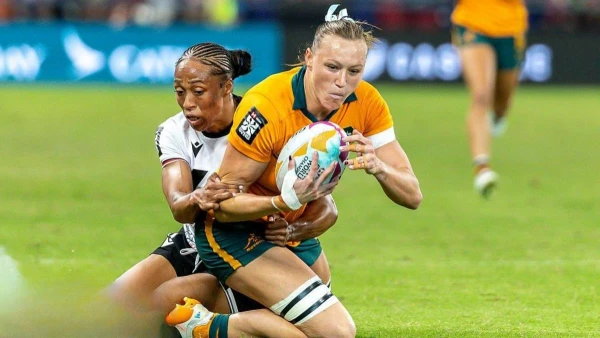
World Rugby has announced the extension of its trial using a smaller 4.5-sized ball in the women’s game for a second season, following promising data that showed measurable improvements in key aspects of play.
The governing body revealed that during the initial trial, which focused on rugby sevens, ruck speeds increased by an average of 10%, while passing rates—after four years of decline—rebounded significantly. Crucially, goal-kicking accuracy remained unaffected, addressing concerns about the ball’s impact on fundamental skills.
The 4.5 ball will now be used in the upcoming 2026-27 HSBC SVNS Series and Championship, with the season opener set to take place in Dubai on November 28. A final decision on whether to adopt the smaller ball across the entire women’s game is expected in February, though data from the XVs format is still being collected.
The trial has sparked a divide among players. England fly-half Zoe Harrison has been a vocal critic, calling the change the "worst decision ever" earlier this year. In contrast, Wales wing Lisa Neumann praised the adjustment, stating it had "changed the game" for her by enhancing grip and passing precision.
World Rugby’s chief player welfare and rugby services officer, Mark Harrington, emphasized that the timing of the trial was carefully chosen to avoid conflicts with major international qualification tournaments. "This was the window of the 12 to 18 month period where it didn’t necessarily conflict with Olympic qualification or Rugby World Cup qualification," he explained. "Wherever we land [in February], it’s the same ball for both codes."
The trial’s extension comes as World Rugby weighs the potential for a permanent shift. Sally Horrox, Head of Women’s Game, acknowledged the need for a structured transition if the change is adopted. "There’ll need to be some proper planning and a sensible transition," she said. "You don’t want to put that burden on the game or that opportunity on the game without having the chance to plan."
Horrox also highlighted the importance of considering the broader impact, including support for the community game and economic factors. "We are considering the economics of the situation and any phase change or rollout," she added. "If a change is recommended, then we, the unions, and the high-performance committee would weigh up the costs, the supply, and the impact on the community game before anything happened."
The decision in February will determine whether the smaller ball becomes a permanent fixture in women’s rugby, reshaping the sport’s technical and tactical landscape for years to come.