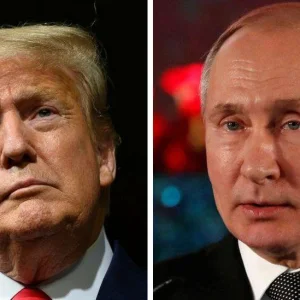
In a controversial pivot, the Trump administration has temporarily suspended sanctions on Russian oil purchases, a move designed to cushion the global economy from the devastating energy shock caused by the ongoing US-Israel conflict with Iran.
The 30-day waiver permits international buyers to scoop up millions of barrels of Russian crude that have been stranded at sea. US Treasury Secretary Scott Bessent defended the short-term measure as a necessary counterweight to the economic chaos unleashed by the Iranian regime.
However, the policy reversal has triggered immediate backlash from pro-Ukraine advocates and international allies. Critics warn the waiver effectively tosses a financial lifeline to Moscow just as its oil exports were hitting their lowest levels since the 2022 invasion. Benjamin Hilgenstock of the Kyiv School of Economics estimates the move could inject up to $10 billion into Russia's economy, funneling billions directly into the Kremlin's war chest.
Prominent sanctions activist Bill Browder unequivocally condemned the decision.
"The only thing lifting sanctions does is puts more money in Putin's pockets and less in these countries'," Browder stated, arguing the move will "enrich Vladimir Putin and prolong the war in Ukraine."
Moscow, conversely, has eagerly embraced the reprieve. Kirill Dmitriev, an economic envoy for Putin, declared that the rollback proves the global energy market cannot survive without Russian supplies, labeling the easing of restrictions "inevitable."
Prior to this waiver, Washington had aggressively penalized nations for bypassing embargoes—including slapping massive 50% tariffs on Indian imports—leaving an estimated 50 to 100 million barrels of Russian oil idling on tankers in Asian waters. While this crude can now legally be purchased, energy analysts remain skeptical it will solve the broader inflation and supply crisis.
Warren Patterson, head of commodities strategy at ING, noted that unlocking this Russian crude will "only scratch the surface" of the massive shortages caused by the closure of the Strait of Hormuz. The vital maritime chokepoint normally facilitates one-fifth of the world's oil trade, and its disruption has sent global prices skyrocketing.
The unilateral American decision has exposed deep fractures within the G7. Leaders from the UK, Canada, and Germany have staunchly opposed the waiver. German Chancellor Friedrich Merz highlighted that six of the seven G7 leaders remain committed to stringent anti-Russian sanctions, while UK energy minister Michael Shanks warned the windfall simply funds Putin's military operations.
Sanctions campaigner Alexander Kirk of Urgewald warned that the US waiver sends a dangerous symbolic message to the Kremlin: "Wait long enough and the West will blink."
Yet, the reality of the Middle Eastern conflict has stretched Western economic strategies to their absolute breaking point.
"The challenge in the Strait of Hormuz is so massive, that ability is gone for now," Hilgenstock noted, acknowledging that the effectiveness of the embargo heavily relied on an otherwise stable global oil market. "There is not much that we can do until it is over."