
Despite the biting winter cold that freezes Beijing's waterways, the Chinese capital is experiencing an intense diplomatic warming. In recent months, an array of international leaders has flocked to the city.
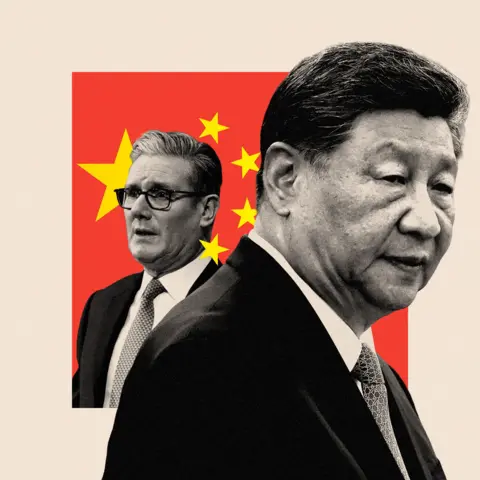
Following a parade of dignitaries from nations including France, Canada, South Korea, and Ireland—with Germany's chancellor slated to arrive soon—UK Prime Minister Keir Starmer is stepping onto the Beijing stage. As the first British premier to make the journey in eight years, Starmer can anticipate a cordial reception. This diplomatic red carpet was notably smoothed by London's recent approval of a sprawling new Chinese embassy, a concession Beijing reportedly demanded before finalizing the visit.
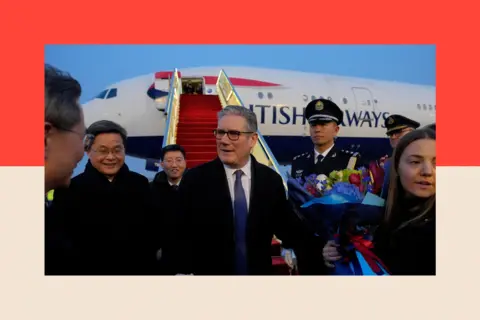
With logistical hurdles cleared, both nations are preparing to negotiate. For Britain, the prize is a slate of lucrative economic agreements. According to Dr. Yu Jie, a senior research fellow at Chatham House, simply forging a functional trade dynamic would mark a significant success. However, observers are questioning whether Beijing views Starmer's arrival as a mere bilateral reset or a strategic move in a broader geopolitical chess match.
The Strategic Charm Offensive
Beijing is actively positioning itself as an anchor of global stability—a deliberate contrast to the unpredictability of the United States. This strategy recently paid dividends with Canadian Prime Minister Mark Carney, who preceded Starmer in Beijing and declared a "new strategic partnership" with China, citing a "point of rupture" in the traditional global order.

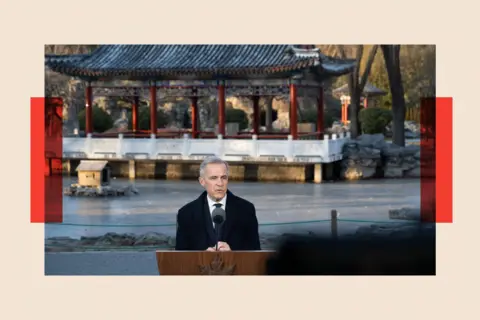
For Chinese President Xi Jinping, mending a decade-long rift with Canada was a major diplomatic victory. Yet, it triggered immediate backlash from Washington. US President Donald Trump swiftly threatened Canada with a crushing 100% tariff, sending a stark warning to the international community: aligning with Beijing invites fierce American retaliation.
Britain's Geopolitical Tightrope
Aware of the crossfire, Starmer is attempting a delicate balancing act. Prior to his departure, he emphatically stated that the UK refuses to pick a side between Washington and Beijing. Chinese officials are likely to accept this pragmatic stance, understanding the limits of fracturing the historic US-UK alliance.
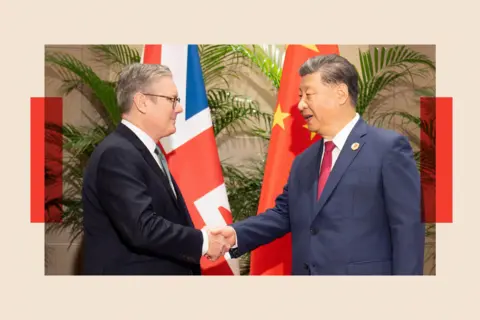
Dr. Yu Jie notes that Beijing harbors no illusions about severing those transatlantic ties. Instead, both countries are navigating the fallout of an era Starmer himself branded a diplomatic "ice age." A complete return to former glories is off the table; a cautious, gradual thaw is the most realistic outcome.
Echoes of the "Golden Era"
A glimpse into the bygone warmth of Sino-British ties can be found in a Beijing Hutong pub, where former UK student Bowei Wang serves up craft ale brewed in Glasgow. His cross-cultural venture—where Scottish beer meets Chinese patrons under screens broadcasting both Braveheart and Queen Elizabeth I—is a lingering artifact of a celebrated past.

The zenith of that period was famously captured in 2015 when then-Prime Minister David Cameron and President Xi shared pints and fish and chips at a British countryside pub. Today, such a casual display of camaraderie is unimaginable. London is grappling with deep-seated security apprehensions, ranging from espionage and intellectual property theft to the alleged harassment of Chinese dissidents on British soil.
Over the past eleven years, the balance of power has radically shifted in Beijing's favor.
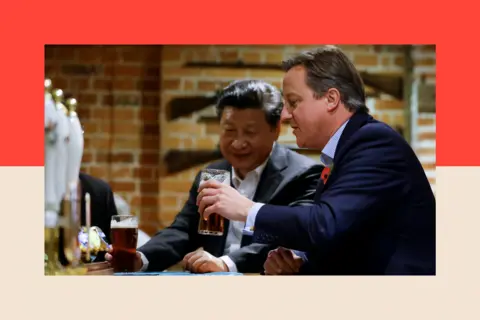
Dr. Yu Jie dismisses the notion of reviving the "golden era" as pure fantasy, pointing to the profound shift in economic parity. President Xi now commands a vastly more formidable nation. Following a bruising, yet ultimately stabilizing, trade standoff with the US, Beijing has underscored the world's deep reliance on its industrial engine. China currently manufactures a third of global goods, processes over 90% of rare earth minerals, and dominates the production of green technology like electric vehicles and solar panels.
This staggering market dominance arms Beijing with potent geopolitical leverage—a tool it has not hesitated to deploy against nations like Australia, Japan, and Canada when diplomatic disputes arise.
A Pragmatic Path Forward
If a renewed golden age is impossible, bilateral commerce remains a tangible silver lining. Tom Simpson of the China-Britain Business Council emphasizes that China stands as the UK's third-largest trading partner, absorbing roughly £45 billion in British exports. He argues that Starmer's visit is vital for injecting confidence back into the bilateral corporate landscape.
However, skepticism remains deeply rooted on the Chinese side. Professor Gao Jian of Shanghai International Studies University argues that Starmer's rhetoric about engagement has been hollow. Characterizing the prime minister's efforts as "lukewarm," Gao also voiced harsh critiques of the UK's internal political stability, describing Britain's domestic situation as chaotic and questioning the long-term survival of the current Labour government.
As Starmer steps into Beijing, the mission is clear: secure vital economic lifelines without stepping on geopolitical landmines, all while navigating a superpower that holds an increasingly dominant hand.