
The UK is facing an "epidemic of everyday crime," according to the Home Secretary, with offenses like shoplifting and smartphone theft spiraling out of control.
For Shabana Mahmood, the crisis evokes memories of working at her parents' corner shop, where a cricket bat was kept faithfully under the counter to ward off repeat shoplifters. While overall crime rates have trended downward in recent years, these visible, everyday offenses have surged, driving up public anxiety and leading citizens to question whether the police will even answer their calls during a burglary or mugging.
Public confidence in law enforcement has been severely eroded by a string of high-profile scandals, horrific offenses committed by a minority of serving officers, and glaring institutional blunders. Across the political divide, there is a broad consensus that the current policing model is fundamentally broken. However, agreeing on how to fix it is an entirely different battle.
A Radical Blueprint for Change
Mahmood is preparing to unveil what she claims will be the most sweeping reform to policing since its inception two centuries ago. The comprehensive plan is set to be fully outlined on Monday, but preliminary details suggest a dramatic consolidation of power and resources.
The most glaring structural shift involves slashing the number of regional police forces in England and Wales. The government aims to shrink the current 43 forces down to roughly a dozen, though an exact final number has yet to be mandated.
Accountability is also a major focus. Under the proposed blueprint, police officers will be required to hold professional licences—subject to periodic renewal—much like doctors and lawyers. Furthermore, ministers would be granted the unprecedented authority to terminate underperforming Chief Constables and deploy specialized intervention teams to failing departments.
Perhaps the most ambitious aspect of the overhaul is the creation of a massive national mega-force. This would reportedly be achieved by merging the National Crime Agency (NCA) with Counter Terrorism units and other national-level policing elements into a single, centralized powerhouse.
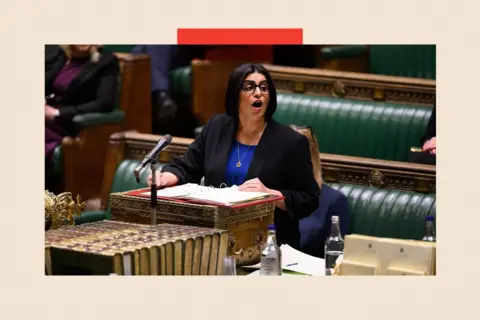
This is not the first time Westminster has flirted with the idea of a "British FBI." In 2006, Labour launched the Serious and Organised Crime Agency (SOCA), which largely failed to meet expectations. It was later replaced by the NCA under the Coalition government. Now, the plan is to merge the NCA into an even larger behemoth designed to tackle the full spectrum of serious offenses.
Proponents argue this scale is necessary. Modern serious crime—from human trafficking to complex financial fraud—is increasingly driven by sophisticated, international networks. By combining forces, officials hope to match the scale of the criminal enterprises targeting local communities.
However, insiders concede that financial realities are heavily driving the restructuring.
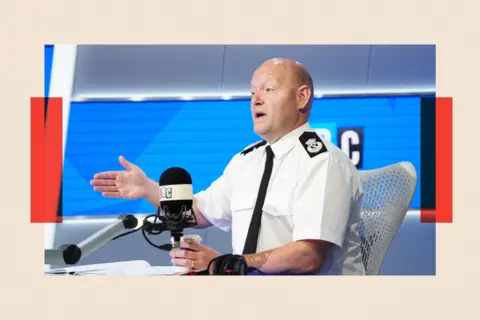
Despite boasting a massive budget, the Home Office has faced relatively tight financial settlements compared to other government sectors. By eliminating the "ridiculous" anomalies of having 43 separate forces independently purchasing equipment, uniforms, and IT systems, the government hopes to leverage bulk buying to save taxpayer money.
Streamlining the "cluttered landscape" of overlapping national initiatives into a single entity working alongside larger regional forces is viewed by supporters as a pragmatic, cost-effective evolution.

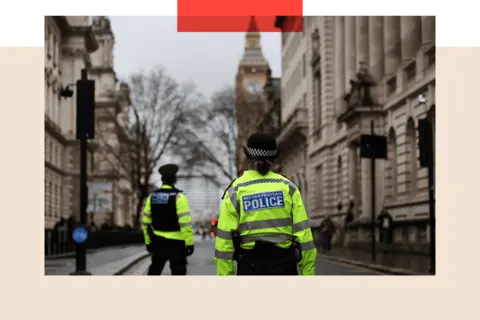
History, however, suggests the road ahead will be rocky. During their last stint in power, Labour attempted a highly publicized reduction of forces under former Home Secretary Charles Clarke. Met with fierce resistance from local forces and opposition politicians, the plan was ultimately scrapped.
The Conservatives are already mounting similar counter-arguments today. Critics question whether consolidating forces actually correlates with reduced crime, pointing to the Metropolitan Police—the UK's largest force—which currently suffers from miserable crime-solving rates and systemic controversies.
Scotland's transition to a single national force years ago offers a mixed preview: while hundreds of millions were saved, the merger was plagued by high-profile operational failures. Opponents are likely to warn that mega-forces risk alienating local communities, while transferring accountability from local crime commissioners directly to the Home Secretary could be viewed as a political power grab that threatens the operational independence of the police.
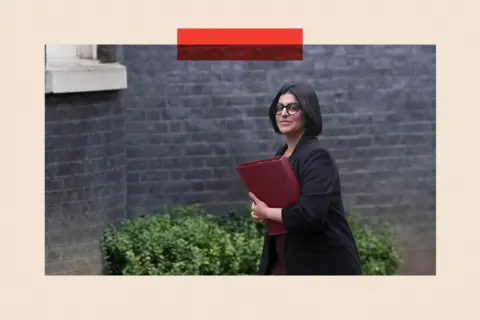
Despite the government's commanding parliamentary majority, the implementation of these sweeping reforms is far from guaranteed. While senior law enforcement figures are reportedly supportive of the changes, the rank-and-file view the proposals with deep skepticism.
The Police Federation has expressed severe doubts about the reorganization, arguing that structural shifts will do nothing to improve the dismal morale of overworked officers. The union is particularly incensed by the concept of mandatory licences, noting that unlike doctors and lawyers, police officers lack industrial rights and are paid significantly less.
"The service is the most inexperienced it's been in living memory, resignations, assaults on officers and mental health sickness absence are all at record levels," the Federation stated, pushing back against the government's rhetoric about getting officers "match fit."
Any tangible changes to the policing landscape remain years away. The process will begin with a lengthy government consultation aimed at forging consensus, meaning this ambitious, highly controversial shake-up still has a long and bruising journey ahead.