When most people picture the strategic Strait of Hormuz they imagine oil tankers and geopolitics, not a kitchen table. Yet the narrow waterway that links the Persian Gulf to the Gulf of Oman also hides a culinary world that surprised me on a recent visit.
I was in Iran mapping regional specialties for my forthcoming cookbook The Saffron Tales. Over several months I cooked with farmers, pharmacists, yoga teachers and restaurant owners from the snow‑capped mountains of Tabriz to the rice paddies of the Caspian Sea. My mother hails from Iran, and my childhood was spent in the lush Gilan province, where fresh herbs, saffron‑stained rice and tangy pomegranate molasses define everyday meals. The south, however, offered a different palate.
In February I arrived in Bandar Abbas, a modest port city perched on the Hormuz strait. The climate was a mild 25 °C, and the markets smelled of chilies, coriander and tamarind – the “holy trinity” of Bandari cooking. Historically a stop on the spice route from India to Europe, the city blends Persian, Arabic and Indian influences. Fresh fish from the warm Persian Gulf is poached, grilled, or even dried into powders, while tropical fruits such as mangoes and guavas are pickled in Indian‑style brines.
Strolling through the bustling streets I sampled a handful of local street foods. Balaloot – buttery noodles drenched in cardamom and saffron, finished with a fried egg – made a hearty breakfast. Deep‑fried sambusa pockets burst with spicy potato, green chilli and tamarind. And thin crepes smeared with suragh, a fermented sardine paste mixed with red soil, salt and Seville oranges, offered a salty tang that lingered on the palate.
The highlight of the trip was a home‑cooked lunch at the house of Goli Heydari, a school teacher, and Ahmad Ravani, a musician. As I slipped off my sandals, the earthy scent of fenugreek greeted me. “I’m making ghalee mahi,” Goli announced, pointing to a bubbling green stew. I helped stir the pot, adding a splash of tamarind that brightened the broth with citrus heat. Together we rolled fishcakes – flaked white fish, mashed potato, coriander and chilies formed into golden patties – and fried them until crisp.
The table was a sofreh – a richly patterned cotton cloth spread on the floor – around which the family traditionally eats. Besides the stew and fishcakes there were steamed rice, toasted flatbread, a platter of fresh herbs, thick yoghurt, and small bowls of aubergine and chilli pickles. Even though only four of us were present, Goli prepared enough for eight; in Iranian hospitality, a hungry guest is simply unthinkable.
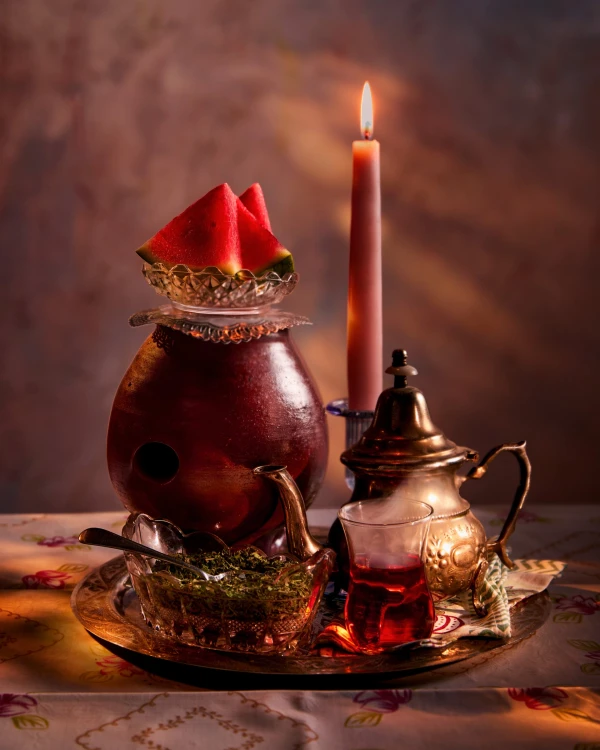
While we ate, Ahmad, a percussionist of African‑Iranian descent, shared the region’s history. After the Portuguese left Hormozgan in the 16th century, many African slaves stayed and kept their musical traditions alive. Their drumming became a hallmark of Bandari culture, surviving restrictions on popular music imposed after the 1979 Islamic Revolution. After the meal, Ahmad taught me to play the jaleh, a clay water jug struck with the palms, and rapped an ode to Bandar Abbas as Goli poured tea and sang along.
The afternoon lingered with music, tea, fruit and conversation. Ahmad works nights as an oil‑company security guard, but his true passion is rhythm; he keeps a full drum kit squeezed into his living room. He also spoke candidly about the economic hardships of the area and the racism that black Iranians like himself still endure. Goli, ever the generous host, pressed more fishcakes onto my plate, urged me to marry soon, and confided the pain of several miscarriages while holding out hope for a child.
That lunch taught me why home cooking matters more than any restaurant menu. It offers a direct line to people’s histories, hopes and daily joys. In the simple act of sharing a stew on a floor cloth, I witnessed the resilience of a community bound by food, music and stories.
“I’m making ghalee mahi,” Goli said, and the stew became a portal to the heart of Bandar Abbas.