Skip to main contentSkip to navigation
Close dialogue 1/2 Next image Previous image Toggle caption
Support the Guardian
Fund independent journalism
Support from $3.45 a weekSupport from $3.45 a week
US
The Guardian - Back to home The Guardian
- [x]
Show more Hide expanded menu
-
- News
-
- Opinion
-
- Sport
-
- Culture
-
- Lifestyle
-
Search input google-search Search
-
* [Search jobs](https://jobs.theguardian.com/) -
Search input google-search Search
- [x]
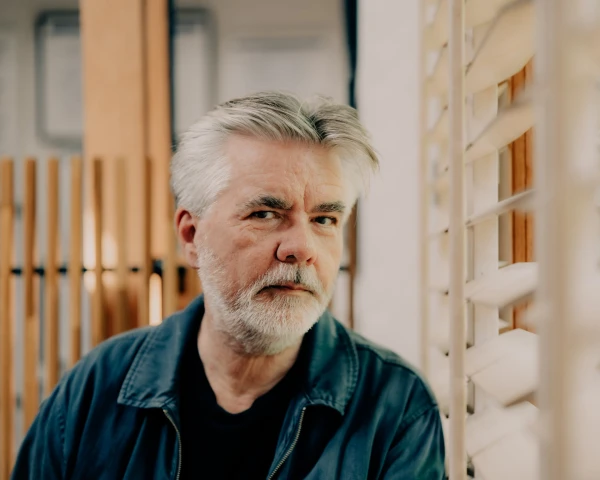
‘I’m still adjusting’ … Mike Bell. Photograph: Peter Flude/The Guardian
‘I’m still adjusting’ … Mike Bell. Photograph: Peter Flude/The Guardian
A new start after 60Life and style
A new start after 60: I spent eight years thinking I had Parkinson’s. Then doctors ‘de-diagnosed’ me
Mike Bell was 53 when he got the diagnosis that changed his life – and 61 when he learned it was wrong. He felt relieved, but also totally adrift
Mon 29 Jun 2026 01.45 EDT
Share
W hen he was 61, Mike Bell, who had spent eight years living with a Parkinson’s diagnosis, saw a new consultant. Though he still had pains, tingling, tremors and skin problems, Bell had stopped taking his prescribed medication and his symptoms had not worsened. Further brain scans were arranged – “everything, in every possible position” – after which Bell was “de-diagnosed”.
He still felt unwell, with unexplained pains, but he didn’t have Parkinson’s. In that moment, he says, he “lost his roadmap”, his sense of community with other people he had met with the same illness and his work campaigning for better understanding of the condition.
Bell was 53 and a freelance show designer for corporate clients when he was diagnosed. “I was working long hours, seven days a week, from my shed,” he says. “All those things we worry about now with working from home were hitting me. The loneliness.”
Sitting in the doctor’s office after being told he had Parkinson’s, Bell had felt relief. “I thought: OK, it’s got a name. Therefore, I can take drugs. Therefore, we can control it.”
He developed what he calls his “Parkinson’s filter” – activities that kept him healthy. He embraced creative projects. He wrote a poem a day, calculating that by the time he had written his 10,000th verse, he would be in his 80s. He wrote a children’s novel and meticulously researched musicians’ careers, then plotted them, complete with details of releases and session musicians,in the style of a tube map.
He joined a community of people with Parkinson’s, attended the World Parkinson Congress in Spain, advocated and fundraised with sponsored walks and a parachute jump. His second marriage ended and the freelance work became scarcer, but he focused on keeping going.
When he was “de-diagnosed” last June, Bell’s three adult children were relieved – but his immediate response was that he “felt like an impostor”. His campaigning now seemed fraudulent. The poetry ground to a halt.
Bell’s medical team have suggested other diagnoses, such as fibromyalgia or chronic fatigue syndrome, but he still doesn’t know for certain what illness he has. In a sense, he says, he lost the thing that was “driving me to do things and to engage”. He re-examined his life.
‘At 62, I can start a new career. I can do band merch’ … Bell with one of his musicians’ ‘tube maps’. Photograph: Peter Flude/The Guardian
Bell’s father was a police officer, his mother a nurse. The third of four boys, he grew up with the sense that he was an “accident”; the feeling this gave him perhaps wasn’t a million miles from feeling like an impostor. He now thinks he always worked long hours to “prove my worth. It’s like: I’m here. This is me.”
He finished school at 18, having “cocked up my A-levels”. He went to work for a music staging company at the film studios in Shepperton, Surrey, near where he lived. David Bowie wandered across the loading dock one day. Bell had a brief stint as a roadie with Simple Minds, working his way home from France. In his 20s, he began to work in corporate production: installations for live events and conferences. Eventually, he began designing them himself.
“I loved organising things, managing the resources, getting things happening … scheduling, spreadsheets, worrying about this, worrying about that.” In a sense, he always liked roadmaps.
A year on from his “de-diagnosis”, alongside the feeling of relief, Bell has had a kind of accidental reset and found himself on a different path: “It’s like living a new life.” But how to navigate it? “It’s been a year getting my head around the de-diagnosis,” he says. “I’m still dealing with it, adjusting.”
Having lost his sense of belonging to the Parkinson’s community, he has had to figure out where he fits in. He has made lifestyle changes. He drinks less, eats better and fasts from 5.30pm. He has met someone new and fallen in love.
And he has started to think that, “at 62, I can start a new career. I can do band merch.” This year, he has supplied his foldout tube maps to the country singers Dierks Bentley, Lainey Wilson and Cody Johnson to sell as tour merchandise.
“The band maps take me all the way back to the beginning again, when I could pack a truck with flight cases all the way to the hilt,” he says. “It was an art.”
Now, though, it’s the data and the research depths that excite him – tracking the intersections of artists’ careers, plotting how all the connections fit together. In doing so, he is becoming his own mapmaker, finding a place for himself.
In this new role, he tells himself, “you can re-enter rock’n’roll”.
Tell us: has your life taken a new direction after the age of 60?
Do you have an opinion on the issues raised in this article? If you would like to submit a response of up to 300 words by email to be considered for publication in ourletterssection, pleaseclick here
At this unsettling time
We hope you appreciated this article. Before you close this tab, we want to ask if you could support the Guardian at this crucial time for journalism in the US.
In his first presidency, Donald Trump called journalists the enemy; a year into his second term, it’s clear that this time around, he’s treating us like one.
From Hungary to Russia, authoritarian regimes have made silencing independent media one of their defining moves. Sometimes outright censorship isn’t even required to achieve this goal. In the United States, we have seen the administration apply various forms of pressure on news outlets in the year since Trump returned to office. One of our great disappointments is how quickly some of the most storied US media organizations have folded when faced with the mere specter of hostility from the administration – long before their hand was forced.
While private news organizations can choose how to respond to this government’s threats, insults and lawsuits, public media has been powerless to stop the defunding of federally supported television and radio. This has been devastating for local and rural communities, who stand to lose not only their primary source of local news and cultural programming, but health and public safety information, including emergency alerts.
While we cannot make up for this loss, the Guardian is proud to make our fact-based work available for free to all, especially when the internet is increasingly flooded with slanted reporting, misinformation and algorithmic drivel.
Being free from billionaire and corporate ownership means the Guardian will never compromise our independence – but it also means we rely on support from readers who understand how essential it is to have news sources that are immune to intimidation from the powerful.
We know our requests for support are not as welcome as our reporting, but without them, it’s simple: our reporting wouldn’t exist. Of course, we understand that some readers are not in a position to support us, and if that is you, we value your readership no less.
But if you are able, please support us today. All gifts are gratefully received, but a recurring contribution is most impactful, helping sustain our work throughout the year ahead (and among the great benefits, we’ll show you far fewer fundraising requests like this). It takes just 37 seconds to give. Thank you for protecting the free press.
Support $5/monthly
Recommended
Support $15/monthly
Unlock All-access digital benefits:
- Far fewer asks for support
- Ad-free reading on all your devices
- Unlimited access to the premium Guardian app
- Regular dispatches from the newsroom to see the impact of your support
- Unlimited access to Feast, the Guardian recipe app
Support once from just $1
Remind me in August
Explore more on these topics
Share
Most viewed
- #### Two tickets for Wimbledon Centre Court? That’ll be £586,000 please
- #### Donald Trump hijacked America’s 250 and turned it into a ‘theatre of the absurd’
- #### Ex-Alaska mayor and ‘parent of the year’ charged with sexual abuse of minors
- #### A new start after 60: I spent eight years thinking I had Parkinson’s. Then doctors ‘de-diagnosed’ me
- #### Prince Harry and family’s UK visit ‘pulled from under their feet at 11th hour’
A new start after 60
A new start after 60
- ### A new start after 60: I fell out of love with my job when it went online. So I’m beginning again – in nursing 15 Jun 2026
- ### A new start after 60: I became my husband’s carer – and saw travel, nature and love anew 1 Jun 2026
- ### A new start after 60: I dedicated myself 100% to saving soil – and a life of wild adventure began 18 May 2026
- ### A new start after 60: I embarked on a colourful, glamorous, life-changing new career at 72 4 May 2026
- ### A new start after 60: my father died when I was a child – and I followed him to Antarctica 20 Apr 2026
- ### A new start after 60: I jacked in my job in tech to become a professional poker player 6 Apr 2026
- ### A new start after 60: I went on 75 first dates – and wrote a book of Kama Sutra-inspired poetry 23 Mar 2026
- ### A new start after 60: I’d had several careers but no degree – then I became a palaeontologist at 62 9 Mar 2026
More from Lifestyle
More from Lifestyle
- ### Having children makes you smarter? Incredible, but true 3h ago95 95 comments
- ### Is it true that … vitamin C serums provide added sun protection? 6h ago
- ### Trekking through a living mountain culture: Spain’s Picos de Europa 7h ago
- ### How a Romford maternity ward was able to turn the tide after a ‘requires improvement’ rating 18h ago
- ### This $380 foldable kayak fits in my Prius and goes from backseat to lake in 10 minutes 20h ago
- ### ‘I eat pasta almost every day’: a day in the life of a world champion pizza athlete 21h ago
- ### Kindness of strangers: We were hopelessly lost in the Sudanese desert. Then villagers offered us a hut to stay in 22h ago
- ### Are there places on Earth where humans haven’t been? 1d ago90 90 comments
Most viewed
Most viewed
Most viewed Across the Guardian
-
Two tickets for Wimbledon Centre Court? That’ll be £586,000 please
-
A new start after 60: I spent eight years thinking I had Parkinson’s. Then doctors ‘de-diagnosed’ me
-
Ex-Alaska mayor and ‘parent of the year’ charged with sexual abuse of minors
-
Donald Trump hijacked America’s 250 and turned it into a ‘theatre of the absurd’
-
Prince Harry and family’s UK visit ‘pulled from under their feet at 11th hour’
-
Trump renaming fiasco fuels jokes as Maher takes Kennedy Center’s Mark Twain prize
-
Porn star turned late-night TV icon Robin Byrd: ‘Sex is a form of magic’
-
Trafficked, beaten and raped: raids reveal scale of abuse of women in Asia’s cyberscam centres
-
‘We’re up against forces that have all the money in the world’: Erin Brockovich on her battle against AI datacentres
-
Live Andy Burnham confirms he will set up ‘No 10 North’ in Manchester in major policy speech – UK politics live
Most viewed in Life and style
-
A new start after 60: I spent eight years thinking I had Parkinson’s. Then doctors ‘de-diagnosed’ me
-
The pet I’ll never forget: Holly, the beagle who chewed her way through my home and into my heart
-
This is how we do it: ‘I expected to be a little old spinster, but kinky sex broadened my horizons’
-
‘Smaller doses of exercise are a miracle cure’: 14 expert tips to protect your joints
-
Master your money: 11 experts share hard-earned tips to budget, invest and retire early
-
I wish my son wanted to spend more time with me
-
The moment I knew: After witnessing trauma at a refugee detention centre, we held each other and cried
-
Is it true that … vitamin C serums provide added sun protection?
-
Kindness of strangers: We were hopelessly lost in the Sudanese desert. Then villagers offered us a hut to stay in
-
My father left my mother for another woman. He wants us to start including her. Do we need to?
Original reporting and incisive analysis, direct from the Guardian every morning
-
California resident – Do Not Sell or Share
Support the Guardian
Available for everyone, funded by readers
© 2026 Guardian News & Media Limited or its affiliated companies. All rights reserved.(dcr)