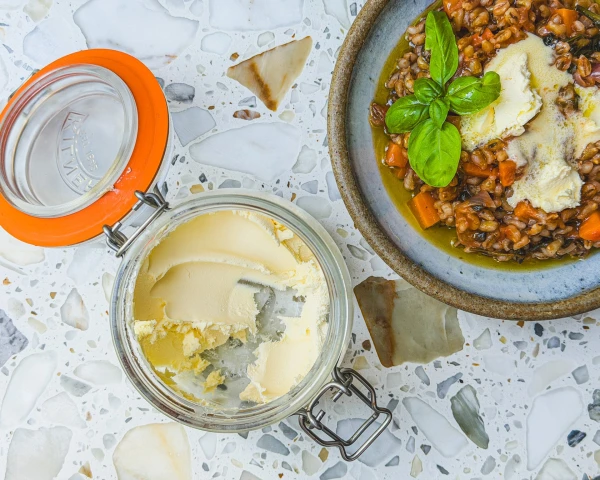
H omemade mascarpone is one of life’s true pleasures: thick, creamy and unctuous, with a classic, tart finish, it’s perfect for everything from desserts such as tiramisu, cheesecake or whipped mascarpone cream to savoury dishes such as pasta, risotto or soup. Mascarpone is a simple cream cheese that’s made by heating, acidulating and straining double cream, and it’s quick and easy to make at home; it’s also a great way to extend the shelf life of leftover cream, while at the same time turning it into a real treat. Even a small batch of 100-200ml cream will produce just enough mascarpone to make many a savoury dish sing, for instance in my pea pod risotto or salad bag soup, or to serve alongside my root vegetable latkes.
Homemade mascarpone
Mascarpone is one of the simplest yet most rewarding recipes. I love making things from scratch that you’d normally buy from the shops, not least because it sheds light on commercial products and teaches us how they’re actually made.
Next time you sniff the remains of a pot of cream and it smells a touch sour, rather than throw it, turn it into your own mascarpone (if there’s any mould, though, it’s too late – time to feed the compost monster). I made a 200ml batch, but you could make it with as little as 100ml, which is more than enough to top a risotto or to spread on toast with honey.
100ml-plus double cream1 tsp lemon juice per 100mldouble cream
Tip the cream into a small saucepan and set it over a medium heat. Stirring with a wooden spoon, heat gently until it reaches 85C, then stir in a teaspoon of lemon juice per 100ml cream. Turn down the heat and, still stirring gently, keep the temperature at a steady 85C for three minutes (if you don’t have a thermometer, turn down the heat once the cream starts to steam and before it simmers, with just a few bubbles around the edge).
Take off the heat and leave to cool at room temperature for an hour, stirring occasionally. Line a small sieve with muslin or a clean cloth, and set this over a bowl (make sure the sieve doesn’t touch the base of the bowl). Pour in the cooled cream, cover with a plate and put in the fridge to drain for eight to 24 hours.
Transfer the mascarpone left behind in the sieve to a clean jar and store in the fridge for up to three days. Save any whey that’s drained off to drink, or use it in baking.
At this dangerous time
We hope you appreciated this article. Before you close this tab, we want to ask if you could support the Guardian at this dangerous time for journalism in the US.
According to a leading global watchdog, American democracy is now more imperiled than at any point since the 1960s, marked by a precipitous decline in press freedom – driven by mounting pressure from the Trump administration in the form of threats, criminal investigations, politicized regulation, frivolous lawsuits and, for public media, catastrophic funding cuts.
Meanwhile, organizations that are supposed to be independent like the FBI and the FCC, our radio and television regulator, have also been targeting press freedom under Trump-aligned leadership, with the FBI raiding a reporter’s home and the FCC threatening ABC’s TV licenses after Jimmy Kimmel made a joke about Melania Trump.
The response from some ultra-wealthy and corporate media owners, keen to appease the president, has been chilling: CBS News has been taken over by a Trump ally; CNN is poised to be taken over by the same billionaire; Jeff Bezos has continued to impose cuts and editorial interventions at the Washington Post; and multiple outlets have settled multimillion-dollar lawsuits from the administration to protect their business interests.
Democracy is best served by a robust, thriving free press. But when that freedom is under attack, it falls to a determined few news organizations to ensure the full truth still reaches the public. Owned neither by a billionaire nor a corporation, the Guardian remains dedicated to covering this administration with uncompromising moral and factual clarity – and to keeping trustworthy journalism paywall-free for the world.
Despite the risks of maintaining our fierce independence, what sustains us – and fills us with deep gratitude – is the unwavering support we’ve seen from readers. It is no exaggeration to say that we are here because of you: a majority of our funding comes directly from people like you responding to messages like this. Your support not only powers our work, but more importantly, it safeguards the financial independence that underpins our editorial freedom and courage.
We know our requests for support are not as welcome as our reporting, but without them, it’s simple: our reporting wouldn’t exist. Of course, we understand that some readers are not in a position to support us, and if that is you, we value your readership no less.
But if you are able, please support us today. All gifts are gratefully received, but a recurring contribution is most impactful, helping sustain our work throughout the year ahead (and among the great benefits, we’ll show you far fewer fundraising requests like this). It takes just 37 seconds to give. Thank you for protecting the free press.
Support $1.15/week
Recommended
Support $3.45/week
UnlockAll-access digitalbenefits:
- Far fewer asks for support
- Ad-free reading on all your devices
- Unlimited access to the premium Guardian app
- Regular dispatches from the newsroom to see the impact of your support
- Unlimited access to Feast, the Guardian recipe app
Support once from just $1