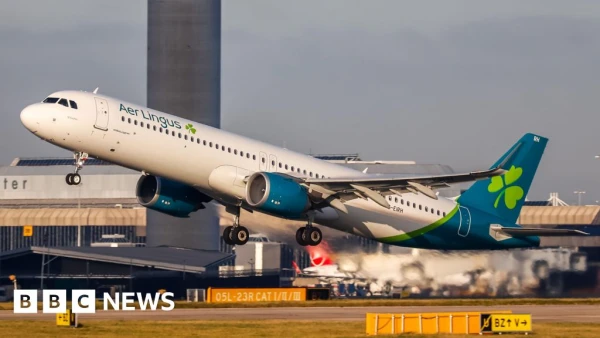
Aer Lingus has removed a limited number of flights from its summer schedule, citing mandatory aircraft maintenance as the primary reason. The airline stated that these adjustments affect approximately 2% of its overall schedule and that the vast majority of customers are being rebooked on same-day services.
According to reports from the Sunday Independent, more than 500 flights have been cut, including routes from Dublin to European destinations such as Amsterdam, Athens, Berlin, Faro, and Zurich. Services to London Heathrow, Manchester, Birmingham, and Edinburgh are also impacted, with affected passengers being accommodated on alternative flights.
While Aer Lingus attributes the cancellations to maintenance needs, industry observers point to broader challenges facing airlines. Travel journalist Simon Calder noted:
"Airlines trimming some of their summer services is becoming widespread across Europe, because the doubling of the cost of fuel means some routes are no longer profitable."
This comment comes amid concerns about jet fuel availability, with the International Energy Agency recently warning that Europe may have only about six weeks of supply left due to disruptions in the Strait of Hormuz—a key shipping route that has been effectively closed by Iran for over six weeks.
However, Mark Tighe, President of the Irish Airline Pilots' Association (IALPA), offered a different perspective. He suggested the cancellations might be linked to pilot shortages rather than fuel issues, noting that Aer Lingus hedges its aviation fuel costs, unlike some competitors.
Tighe explained:
"Pilots are frequently being contacted on their days off and asked to work. This year the company was unable to grant all of the annual leave pilots are contractually entitled to because of the shortages."
Irish Transport Minister Darragh O'Brien addressed fuel supply concerns separately, stating that Ireland maintains robust reserves and receives jet fuel from the United States. He emphasized that airlines make operational decisions independently of government.
The schedule changes reflect the complex pressures facing the aviation industry this summer, where maintenance requirements, crew availability, and global fuel market dynamics are all contributing factors.