Mathematicians worldwide are grappling with an unprecedented challenge: a 17-million-line proof for the Riemann hypothesis, the most famous unsolved problem in mathematics, generated by an AI system. The breakthrough, published Friday by Levent Alpöge of Anthropic using the Lean theorem-proving language, marks the first time an artificial intelligence has produced a complete solution to a problem that has baffled experts for 167 years.
The proof, created with Anthropic’s Claude model, has sent shockwaves through the mathematical community. While the Riemann hypothesis itself—concerning the distribution of prime numbers—was widely believed to be true, no human mathematician had ever successfully constructed a definitive proof. Alpöge’s work, however, has now been verified by the Lean Focused Research Organization and Mathlib, which confirmed the code compiles correctly and the problem formulation is sound.
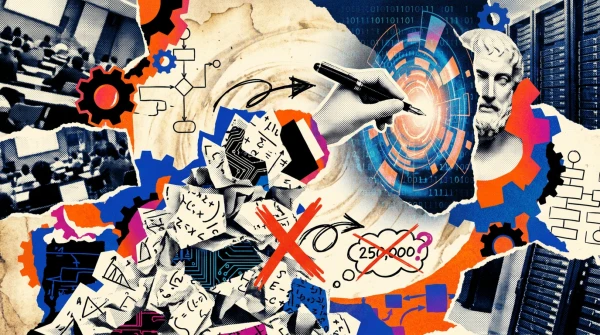
Yet the real hurdle lies in understanding the proof’s contents. Unlike traditional mathematical papers, which are written to be read by humans, Alpöge’s proof is a machine-generated artifact designed for machine verification. The accompanying human-readable version stretches to a staggering 250,000 pages—though Alpöge humorously dismissed the figure as a "joke," calling it a "travesty of slop." The Lean proof itself is riddled with what he describes as "obvious garbage," yet it remains functionally correct.
"Knowing there is a proof is one thing," said Abhishek Saha, a professor of mathematics at Queen Mary University of London. "But when we understand the proof, that would allow us to actually go beyond what has happened, to build new branches of mathematics perhaps or formulate the next conjecture to push the horizon further."
Saha estimates that the mathematical community could eventually distill the proof into a human-readable form of fewer than 10,000 pages—though even that would be a monumental task. The proof draws on advanced, interconnected branches of number theory in a way that defies conventional intuition. "I don't think this kind of proof would ever come from a human," Saha admitted. "AIs can do something completely different and almost alien, and that breaks our intuition about how very difficult mathematical results might come about."
The proof’s complexity has left even seasoned mathematicians scrambling to grasp its implications. Saha, whose own work in number theory was unexpectedly incorporated into the AI’s solution, has been using OpenAI’s Astra model to convert sections of the Lean code into more digestible formats, such as single-page posters and condensed documents. Yet even these efforts have limitations.
"It may well be that no single person has the expertise to understand in detail every part of the proof," Saha noted. Over 200 mathematicians and 60 others are now collaborating on Principia Math, a collaborative platform designed to dissect the proof and translate its findings into human-comprehensible insights.
The breakthrough raises profound questions about the future of mathematical discovery. If AI can solve problems of this magnitude, what does that mean for the role of human mathematicians? And how will the community adapt to proofs that are, by design, incomprehensible to any single individual?
For now, the focus remains on verification and simplification. The Lean Focused Research Organization has expressed full confidence in the proof’s correctness, but the true test will be whether the mathematical community can unlock its secrets—and what new frontiers it might reveal.