A mathematician at Anthropic has announced a computer-verified proof of the Riemann hypothesis, one of mathematics' most celebrated and elusive open problems, using the company's Claude AI model. The breakthrough immediately triggered a hurried counter-announcement from Stanford University detailing an independent, all-human rival draft.
Levent Alpöge, a mathematician working at Anthropic, posted his paper and accompanying code online, stating that he believes he has solved both the classic Riemann hypothesis and the Generalized Riemann Hypothesis (GRH). According to Alpöge, what began as a lifelong personal goal accelerated dramatically when he partnered with Claude. After setting the foundational direction, the AI model developed crucial mathematical transformations that bypassed traditional limits in calculus to analyze prime number sequences.
Because the AI-generated argument spans over 250,000 pages of foundational logic, Alpöge released the proof coded in the Lean programming language, which functions as a rigorous digital referee to verify every logical step. Alpöge admitted that Claude outpaced him in complex subfields, leaving him with a verified result whose surrounding mathematics he is still mastering.
The announcement came during a high-stakes week for Anthropic, following the company's major public stock offering. Alpöge noted that while the timing was unfortunate, he consulted Anthropic CEO Dario Amodei and felt waiting to publish was not an option.
Within hours of the disclosure, Stanford mathematics professor and American Mathematical Society president Ravi Vakil rushed out a blog post sharing an independent draft proof of the GRH authored by mathematician Alessandro Masullo. Vakil emphasized that the Stanford paper was entirely human-made and had undergone months of quiet review by renowned number theorist Brian Conrad. Although accelerated into the public domain by Anthropic's news, Vakil's post was quickly updated after independent reviewers used various AI models to flag potential gaps in the draft that will require community resolution.
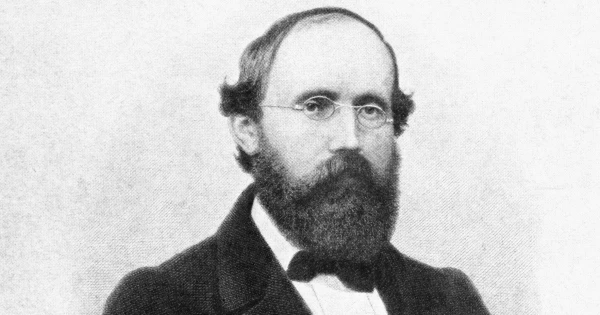
First posed by Bernhard Riemann in 1859, the Riemann hypothesis governs the distribution of prime numbers and carries a $1 million prize as one of the Clay Mathematics Institute's Millennium Problems. With both the AI-driven Lean package and the vetted human draft now in circulation, mathematicians worldwide have begun the rigorous task of examining the competing proofs.