Virginia de Valle gestures across her family's 16-hectare vineyard in Mendoza, Argentina, nestled beneath the towering Andes mountains. "Without water, there would be no wine," she says, voicing a growing concern among winemakers in Argentina's wine capital. Their livelihoods depend on fresh water flowing from the Andes, but recent legislative changes have cast a shadow over this vital resource.
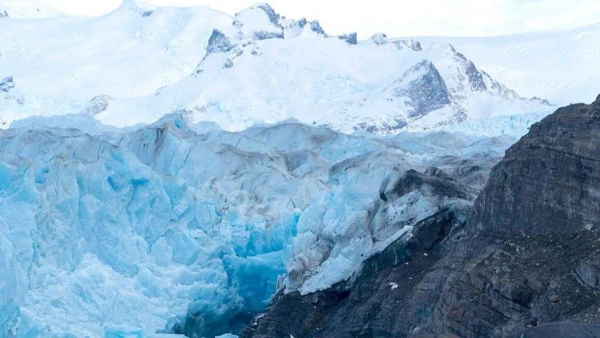
This week, Argentine lawmakers passed reforms that loosen protections for the country's glaciers, which serve as crucial water reserves. The original 2010 law—the first of its kind globally—designated glaciers as protected water sources and banned damaging commercial activities. Under the new framework, provincial governments will now determine which glaciers are "strategically important" based on factors like human consumption, agriculture, or tourism. Glaciers deemed non-strategic can be removed from the national inventory, stripping them of environmental safeguards.
"The Andes mountains, with their winter snow and glaciers, feed the rivers and streams that flow into the valley to irrigate our crops," De Valle explains. "This is also the water we consume in our homes. That is why people say 'Mendoza is the daughter of water.'"
Argentina is home to 16,968 glaciers that supply water to 36 river basins across 12 provinces, supporting approximately seven million people. In semi-arid regions like Mendoza, glaciers act as a buffer during droughts, which are becoming increasingly common. De Valle's vineyard, Bodega Gieco, produces 100,000 liters of wine annually, relying on every drop from these icy reserves.
Proponents of the reforms, including President Javier Milei, argue that the previous law hindered economic development by blocking extraction projects. Milei has emphasized the potential for billions in mining investments, particularly in copper and lithium, which he views as essential for Argentina's energy transition. He noted that while Chile exports $20 billion in copper annually from the same mountain range, Argentina exports none.
"Argentina doesn't export even a single gram of copper, while Chile, which shares the same mountain range with us, exports $20bn a year," Milei told a business forum last November.
However, opposition has been vocal and widespread. Environmental groups and citizens have rallied under the slogan "Los glaciares no se tocan" (hands off the glaciers), with protests erupting across the country. Over 100,000 people signed up for a public hearing on the changes in March, though only a fraction could speak.
Agostina Rossi Serra, a biologist with Greenpeace, asserts, "It made clear that it's not just environmental organizations who were asking for this law not to be amended; it was the people, the public, who were asking for water to continue to be protected."
Glaciologist Lucas Ruiz criticizes the reforms as based on "false arguments," stating, "The most false part of it all is the claim that there are glaciers that do not contribute to rivers. If it's a glacier, it has ice and contributes water. It's very basic." He warns that the ambiguous criteria could put any glacier at risk.
Yet Ruiz acknowledges a complex paradox: glaciers are melting rapidly due to climate change, and the energy transition required to mitigate this relies on minerals like copper and lithium. "It is a stark paradox, hard to accept, but it is the reality," he says, emphasizing that any mining must be responsibly assessed for its impact on glacial environments.
Greenpeace fears that financial incentives may lead provinces to weaken protections, creating a "race to deregulation." Serra notes, "If I have an international company looking for a place to develop a project, I'll probably choose the province with the fewest environmental restrictions."
In contrast, Federico Palavecino, a lawyer advising mining projects, supports provincial autonomy, arguing, "Why should we tell them how to live?" He believes removing barriers could bring much-needed economic benefits to local communities.
Back in Mendoza, De Valle remains focused on raising awareness. "It will affect wineries, but first, it will affect life," she says, determined to educate visitors about the looming threats to Argentina's water and wine heritage.