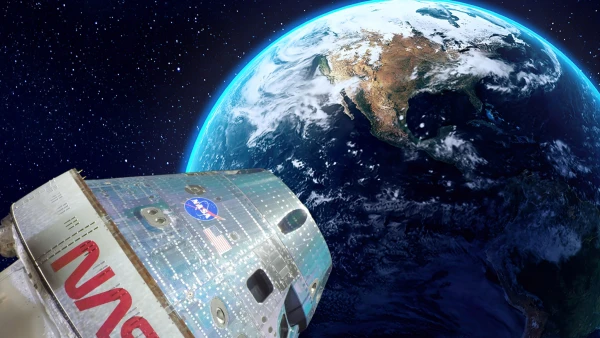
NASA's Artemis II mission has successfully concluded with a flawless splashdown in the Pacific Ocean, marking a pivotal moment in humanity's return to lunar exploration.
After a groundbreaking nine-and-a-half-day journey around the Moon, the Orion capsule carrying four astronauts made a dramatic return to Earth on Wednesday. The spacecraft, which had been hurtling through the atmosphere at over 23,000 miles per hour, deployed three parachutes and touched down gently in the ocean at 5:07 PM Pacific Time, precisely as planned.
"It was a picture-perfect splashdown," mission controllers reported as recovery teams from the U.S. Navy raced toward the floating capsule off the coast of San Diego.
The crew—Commander Reid Wiseman, Pilot Victor Glover, Mission Specialist Christina Koch, and Mission Specialist Jeremy Hansen—represents the first humans to travel to lunar vicinity since the Apollo program ended over five decades ago. Their mission served as a critical test flight for NASA's Artemis program, which aims to establish a sustainable human presence on the Moon and eventually send astronauts to Mars.
Artemis II launched from Kennedy Space Center in Florida on April 1, 2026, embarking on what has been described as the most ambitious crewed space mission in half a century. The astronauts completed a lunar flyby, testing spacecraft systems and gathering valuable data while traveling farther from Earth than any human-rated spacecraft has ever flown.
NASA Administrator Bill Nelson hailed the mission as "a triumph of American ingenuity and international partnership," noting that the successful return paves the way for Artemis III, which plans to land astronauts on the lunar surface.
The crew is expected to undergo medical evaluations before being transported to shore, where they will reunite with their families and begin sharing their experiences from humanity's latest voyage to the Moon.