NASA's Artemis II mission has successfully completed a historic lunar flyby, returning four astronauts safely to Earth after their journey around the far side of the Moon. The Orion spacecraft performed flawlessly, capturing breathtaking imagery that has reignited public fascination with space exploration.
Yet this orbital triumph represents only the first step in humanity's renewed lunar ambitions. The real challenge—actually landing astronauts on the Moon's surface—faces significant technical and logistical hurdles that could delay NASA's ambitious timeline.
"Looping the Moon was relatively easy. The really hard part lies ahead," notes space experts familiar with the program's complexities.
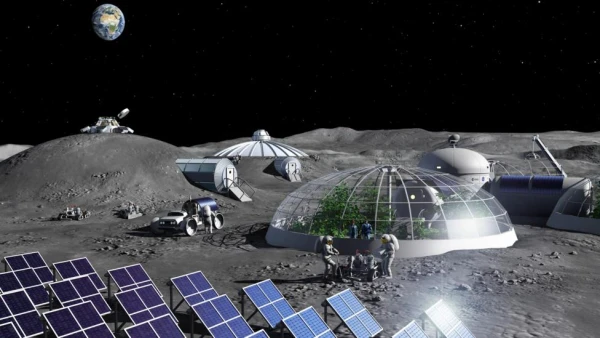
Unlike the Apollo program's Cold War-driven sprint to the Moon, Artemis aims to establish sustainable lunar presence. NASA Administrator Jared Isaacman has outlined plans for annual crewed lunar landings beginning in 2028, with the fifth mission intended to initiate construction of a permanent Moon base.
Josef Aschbacher, Director General of the European Space Agency, expresses cautious optimism: "The Moon economy will develop. It will take time to set up the various elements, but it will develop."
However, achieving these goals depends on solving what space engineers call "the lander problem." NASA has contracted SpaceX and Blue Origin to develop next-generation lunar landers, but both projects face substantial delays.
SpaceX's lunar Starship stands 35 meters tall and remains at least two years behind schedule, while Blue Origin's Blue Moon lander is eight months late with unresolved design issues. These vehicles must transport significantly more infrastructure than Apollo's compact Eagle module—including pressurized rovers and base components—requiring unprecedented amounts of propellant.
The proposed solution involves storing propellant in an orbital depot supplied by over ten separate tanker flights, creating what Dr. Simeon Barber of the Open University describes as "one of the most demanding engineering challenges in the program."
"If it's difficult to do on the launch pad, it's going to be much more difficult to do in orbit," Barber observes, referencing Artemis II's own fueling-related launch delays.
Artemis III, scheduled for mid-2027 to test docking procedures between Orion and the landers, faces what Barber calls "a very steep ask" given that neither Starship nor Blue Origin's New Glenn rocket has achieved reliable orbital flight.
Political considerations further complicate the timeline. NASA's 2028 landing target aligns with current presidential space policy, but independent analysts question its realism despite congressional funding commitments.
Adding urgency is China's accelerating space program, which aims to land astronauts on the Moon around 2030 using a simpler two-rocket approach. If Artemis experiences further delays, China could potentially reach the lunar surface first in this new space race.
The children inspired by Artemis II's celestial images may indeed witness lunar settlements in their lifetimes, but the path from orbital success to sustainable Moon presence remains fraught with engineering challenges, political pressures, and international competition.