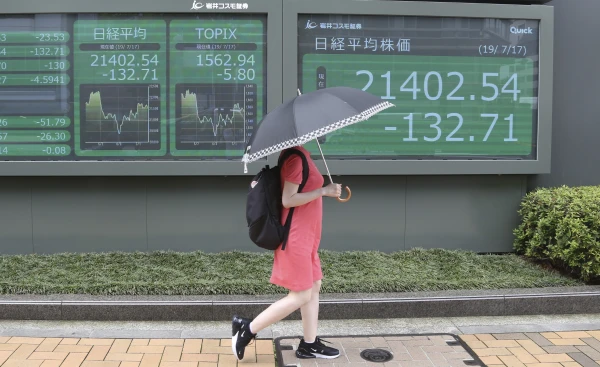
Asian stock markets rallied on Thursday, with Japan's Nikkei index reaching a record high, as optimism grew over potential peace talks between the United States and Iran to end their ongoing conflict and reopen the Strait of Hormuz.
Hong Kong, China — The gains mirrored a strong performance on Wall Street, where the S&P 500 and Nasdaq also hit all-time peaks. Investors were buoyed by robust corporate earnings indicating resilience in the U.S. economy despite concerns over high oil prices and inflation.
With the Middle East crisis entering its seventh week, officials from Washington and Tehran are reportedly preparing for a second round of peace talks in Islamabad. White House Press Secretary Karoline Leavitt expressed confidence, stating, "We feel good about the prospects of a deal."
U.S. Vice President JD Vance, who led the initial negotiations, revealed that Iran is being offered a "grand bargain" to conclude the war. A Pakistani delegation has arrived in Tehran with a new message from Washington, following indications from former President Donald Trump that talks could resume this week.
"Several messages have been exchanged via Islamabad since talks finished Sunday," a spokesman at Iran's foreign ministry confirmed.
However, tensions persist as Iran has threatened to shut down the Red Sea, along with the Gulf and Sea of Oman, unless the U.S. lifts a naval blockade of its ports imposed by Trump after negotiations stalled last weekend.
Despite the geopolitical uncertainties, economic data provided a positive signal, with China's economy growing a forecast-beating 5.0% in the first quarter. This news was warmly received by U.S. investors, contributing to the market rally.
In Asia, Tokyo and Seoul led the surge, with traders returning to AI-based tech investments that had driven markets higher before the conflict began on February 28. Hong Kong, Shanghai, Singapore, Sydney, Taipei, and Manila also posted gains.
Oil prices remained stable but below $100 a barrel as traders anticipated the potential reopening of the Strait of Hormuz, a critical passage for a fifth of the world's oil and gas, which has been effectively closed by Iran.
IMF Managing Director Kristalina Georgieva cautioned that "tough times ahead" could await the global economy if the war continues and oil prices stay elevated, warning that inflation risks might extend to food prices.
As diplomatic efforts continue, market participants appear hopeful that a resolution could ease economic pressures and sustain the current bullish momentum.