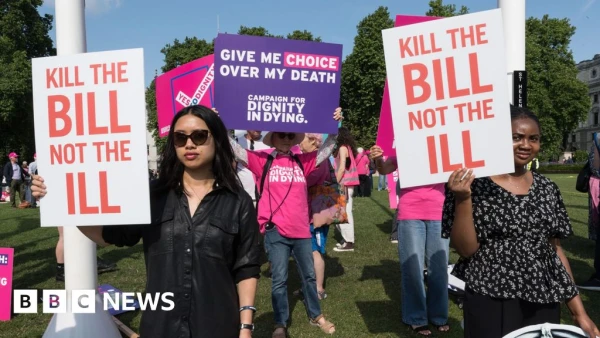
A proposed law to legalize assisted dying in England and Wales will expire on Friday, nearly 17 months after MPs first approved it, as the House of Lords holds its final debate on the legislation.
The bill, which would allow terminally ill adults with a prognosis of six months to live to seek medical help to end their life under certain safeguards, has stalled in the upper chamber. Both supporters and opponents acknowledge it will not complete all required stages to become law in the current parliamentary session, with no further debate time scheduled beyond Friday.
However, there is potential for a revival in the next session beginning 13 May. Several pro-bill peers have signed a letter urging MPs to decide the matter, stating that Parliament must reach a resolution on end-of-life choice as soon as possible. They accuse opponents in the Lords of employing delaying tactics, while critics argue the bill lacks adequate safeguards and that debates have exposed further flaws. Opponents also claim backers have stonewalled attempts to amend the legislation.
More than 1,200 amendments were tabled in the Lords—reportedly a record for a backbench bill. The Terminally Ill Adults (End of Life) Bill initially passed the Commons on 29 November 2024 with a 55-vote majority and cleared the lower chamber again on 20 June last year with a majority of 23.
Labour MP Kim Leadbeater, who introduced the bill, expressed disappointment and anger. She said terminally ill people and their families feel let down by a democratic system where the elected chamber's will was blocked by the unelected Lords. Leadbeater noted that MPs might reintroduce the same bill in the next session under private members' ballot rules, and she hopes it could clear the Commons again with agreement on amendments. She also suggested that the Parliament Acts—rarely used legislation that allows the Commons to override the Lords—could be invoked if necessary, though she prefers a normal legislative process. The Acts were last used in 2004 to ban fox hunting.
Baroness Grey-Thompson, an opponent, argued the bill's failure stems from being poorly written and rushed, with insufficient safeguards. She said she supports the principle but not this particular bill. Lord Falconer, leading the bill in the Lords, opened the final debate by saying he felt "despondent" and blamed procedural wrangling rather than the bill's merits. Baroness Coffey, who tabled amendments, expressed concern that choice for some is being prioritized over protection against coercion for others.
Sign up for our Politics Essential newsletter to keep up with Westminster's inner workings.