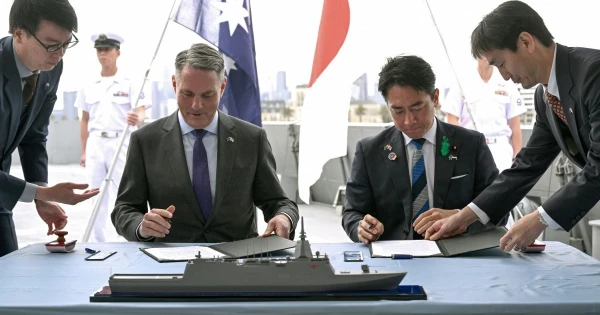
Australia and Japan have solidified a landmark $7 billion defense agreement, marking a significant escalation in their strategic partnership as both nations navigate rising geopolitical tensions in the Indo-Pacific region.
This major naval deal represents the latest step in a rapidly deepening alliance between Canberra and Tokyo, driven by mutual security concerns. Analysts note the timing coincides with increased military assertiveness from China, which both countries view as a challenge to regional stability.
"This partnership goes beyond simple defense procurement—it's about building interoperability and trust between two key democratic allies in the Pacific," said a regional security expert. "The warships themselves are important, but the strategic message they send is equally significant."
The agreement includes advanced warship technology sharing and joint development programs that will enhance both nations' naval capabilities for decades to come. Defense officials from both countries emphasized the deal strengthens their ability to maintain freedom of navigation and uphold international maritime laws.
Observers suggest this collaboration reflects a broader realignment of regional alliances, with democratic nations increasingly coordinating defense strategies in response to shifting power dynamics. The deal follows years of growing military cooperation between Australia and Japan, including joint exercises and intelligence sharing arrangements.
While neither government explicitly named China in their official announcements, defense analysts universally interpret the agreement as a direct response to Beijing's expanding naval presence and territorial claims throughout the region. The warships are expected to enhance surveillance and deterrence capabilities in critical waterways.
This defense pact represents one of Japan's largest military export agreements since relaxing its arms export restrictions, signaling Tokyo's more assertive security posture. For Australia, it continues a pattern of defense modernization and alliance-building that has accelerated in recent years.
The implementation timeline calls for delivery of the first vessels within five years, with technology transfer and crew training programs beginning immediately. Both nations have committed to regular strategic dialogues to ensure the partnership evolves alongside regional security developments.