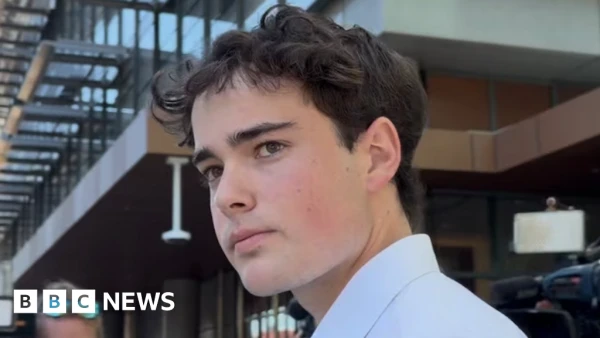
In a groundbreaking legal development, a 19-year-old Australian has become the first person to plead guilty under the nation's new legislation criminalizing deepfake pornography. William Hamish Yeates admitted to four offenses, including creating and distributing manipulated sexual material without consent, marking a pivotal moment in the fight against AI-driven image abuse.
Yeates, who faced up to seven years in prison under the law, entered his plea on Wednesday and is scheduled for a hearing next month. The court revealed that he had distributed non-consensual images of his victim across multiple social media accounts, leading to charges that were initially more extensive before being reduced following his guilty plea.
"There is compelling and concerning data that explicit deepfakes have increased on the internet as much as 550% year on year since 2019," noted Julie Inman Grant of Australia's eSafety Commission, who advised parliament on the legislation. "It's a bit shocking to note that pornographic videos make up 98% of the deepfake material currently online and 99% of that imagery is of women and girls."
Experts describe deepfake pornography as the new frontier of gendered abuse and school bullying, with artificial intelligence technology enabling widespread targeting of women and girls. Australia's internet regulator has been actively warning about the rising threat of AI-manipulated content and advocating for bans on apps that generate non-consensual explicit imagery.
While some Australian states have their own regulations regarding deepfake material, this case represents the first federal prosecution under the new national law. The Commonwealth Director of Public Prosecutions confirmed its landmark status, highlighting the legal system's evolving response to digital exploitation.
As Yeates left court without comment, the case underscores growing global concerns about technology-facilitated abuse and the urgent need for legal frameworks to protect individuals from non-consensual image manipulation.