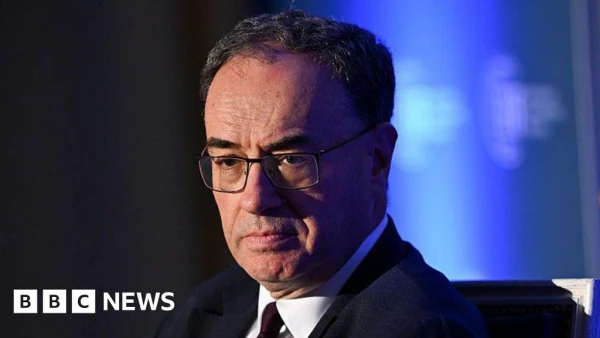
Bank of England Governor Andrew Bailey has emphasized that the central bank will not hastily decide on interest rate adjustments, acknowledging the complex challenges posed by what he called a "very big energy shock" affecting global markets.
Speaking to the BBC during the International Monetary Fund (IMF) meetings in Washington, Bailey noted that rising oil and gas prices will inevitably influence inflation, but other economic factors complicate the decision-making process. The Bank's Monetary Policy Committee is scheduled to meet on April 30 to review its stance.
Bailey referenced recent IMF guidance cautioning against rapid rate hikes following escalating Middle East tensions. "We're taking the IMF's serious advice into account," he stated.
Prior to recent geopolitical developments, expectations leaned toward potential rate cuts later this year. However, the prospect of sustained high energy costs has shifted speculation toward rates remaining steady or even increasing.
"There's really difficult judgments to be made," Bailey explained. "We're not going to rush to judgments on those things, because there are a lot of uncertainties around this, not just how it's going to play out, but also how it's going to pass through into the UK economy."
The governor highlighted the dual impact of energy price increases: potentially driving inflation while simultaneously dampening economic growth. This creates a delicate balancing act for policymakers.
Before the conflict intensified, Bailey observed signs of a cooling labor market and reduced business pricing power—factors that typically ease inflationary pressures. However, he noted the Bank awaits "meaningful data" on how current geopolitical tensions will specifically affect the UK economy.
"It's really too early to form strong judgments on that," he cautioned, adding that Britain's significant reliance on gas means the duration of the conflict will be crucial in determining economic consequences.
Bailey echoed IMF Managing Director Kristalina Georgieva's concerns about potential disruptions to critical global supplies beyond energy, including sulphur, urea, helium, and naphtha. While acknowledging some resilience in current systems, he warned this could diminish if conflicts persist.
"The faster there is a resolution to this situation—I particularly mean in terms of the supply of energy coming out of the Gulf—the easier and better the outcome will be. And that's really critical at this moment," he emphasized.
Amid the uncertainty, Bailey offered one reassuring note: "I do not have concerns about the banking system." He defended current financial regulations, suggesting that "success is when nothing happens and it is resilient."
For homeowners concerned about borrowing costs, Bailey advocated for policy stability through "credible policies that deliver sensibly... over time," encompassing both central bank decisions and government fiscal measures.
The IMF has warned that prolonged conflict could potentially trigger a global recession, with the UK economy particularly vulnerable among major nations.