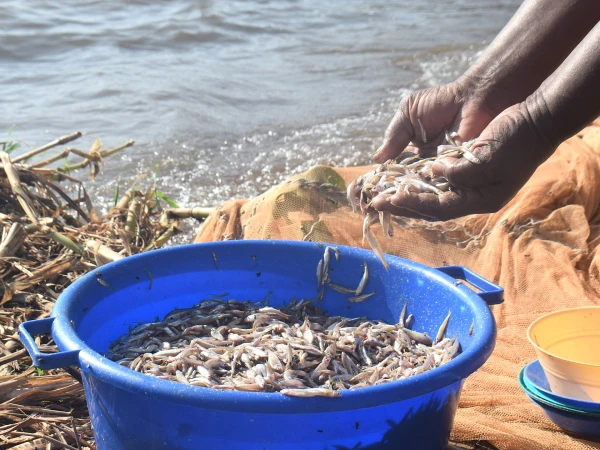
Kagwel, Kenya — Rhoda Ongoche Akech recalls the hushed conversations that trailed her as she approached the shoreline in 2002. At 39, the mother of seven was preparing to challenge one of Lake Victoria's most enduring customs: the prohibition against women entering fishing boats.
"People whispered that if women went on the water with men, they would engage in intimate relations," said Akech, now 61. "But when they saw I was there to learn—and wouldn't back down—the talk gradually faded."
Before that pivotal moment, life in Akech's lakeside village of Kagwel followed familiar rhythms. For generations, fishing had been exclusively male territory, while women like Akech worked as fishmongers, buying catches from fishermen to sell at market. Yet her earnings were shrinking as expenses for fish, firewood, oil, and transportation mounted.
Then in 2001, women from neighboring Homabay County arrived and did the unimaginable—they fished. Inspired, Akech enlisted two young men to teach her. "My family needed it," she explained, despite warnings from villagers who insisted women had no place on the water.
Cultural restrictions against women fishing stem from deeply rooted beliefs. William Okedo, a 57-year-old village elder, noted that traditions were especially strict regarding menstruation. "It was thought that if women entered the lake during their periods, they would scare fish away, causing losses for fishermen," Okedo said. The taboos even extended to male fishermen, who were discouraged from intimacy with their wives before fishing trips.
For 16 years, Akech fished alone—a solitary figure among male fishermen. Then in 2018, Faith Awuor Ang'awo, a 37-year-old mother of four, joined her after years of struggling as a fishmonger. "My husband initially objected, worried about community backlash, but eventually agreed," Ang'awo recalled.
Two years later, Dorcas Awiyo, 22, became the third member. "My husband, a fisherman himself, wasn't receptive at first, but he came around," Awiyo said, noting she needed extra income to supplement his earnings. By 2022, Janet Ndweyi, 42, faced no resistance when she joined. "The community was already accustomed to seeing Rhoda and Faith fish," Ndweyi explained.
On productive days, boat owners at Kagwel Beach can earn 6,000 to 8,000 Kenyan shillings (about $46 to $62), while crew members make 500 to 800 shillings ($3.88 to $6.20). Traders, including former fishmongers, can earn up to 1,000 shillings ($7.75), according to Wilson Onjolo, Seme subcounty fisheries officer. This represents a significant increase from the 500 shillings women previously earned daily buying fish from male fishermen.
Elder Okedo views the transformation with mixed emotions. "Economic hardships are pushing women to break the taboo," he observed, acknowledging that Akech's example has challenged long-held beliefs. Dalmas Onyango, a 35-year-old fisherman, confirmed shifting attitudes: "Most fishermen now support their decision. Difficult times have led women to choices once considered impossible."
Yet the women's progress coincides with growing environmental threats to Lake Victoria. Akech has noticed a gradual decline in her catch since she began fishing two decades ago.
Chris Mutai, a senior meteorologist at the Kisumu station, links dwindling fish populations to climate change impacts on the lake's ecosystem. Rising water temperatures promote algae growth and reduce oxygen levels, directly affecting fish. "Water temperatures could rise another 0.5°C over the next 10 to 20 years," Mutai warned. He emphasized the need for pollution control, riparian zone protection, regulated fishing, and alternative livelihoods like farming to prevent further reductions.
Mutai's station shares five-day weather forecasts via WhatsApp groups and county channels, helping fishing communities—including the growing number of women—plan safer trips.
Lake Victoria sustains over 42 million people for food, jobs, and water, but faces pressures from overfishing, pollution, invasive species, and climate change, which have lowered per capita catches despite annual harvests of about one million tonnes.
Despite their strides, Akech and her team operate in a gray area. Susan Claire, acting director of fisheries and blue economy for Kisumu County, stated, "We have women who own boats and trade fish, but they are not involved in night fishing or as crew members." This official stance leaves the pioneering fisherwomen in a precarious position, even as they navigate both cultural shifts and ecological challenges on East Africa's largest lake.