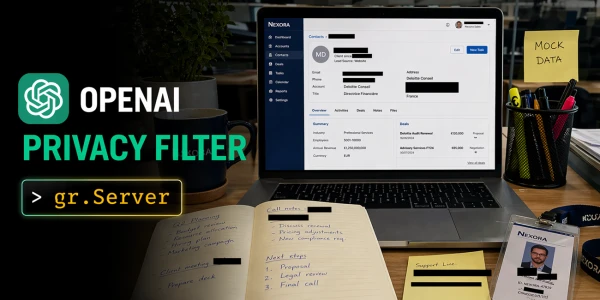
Developers building web applications with OpenAI's API often face a critical challenge: how to leverage AI's power without compromising user privacy. OpenAI's Privacy Filter offers a solution, allowing developers to prevent sensitive data from being sent to or stored by AI models.
The Privacy Filter works by scanning input text for personally identifiable information (PII) like names, email addresses, and phone numbers, and either redacting or blocking it before it reaches the model. This enables developers to build scalable web apps that comply with privacy regulations like GDPR and CCPA.
To implement the filter, developers can use OpenAI's moderation endpoint or custom content filters in their application logic. By combining these tools with secure data handling practices, such as encryption and minimal data retention, creators can build AI-powered features without sacrificing user trust.
While the filter adds latency and requires careful configuration, it is essential for applications handling sensitive data. OpenAI provides documentation and examples to help developers integrate privacy safeguards effectively. As AI adoption grows, such tools will become standard for responsible development.