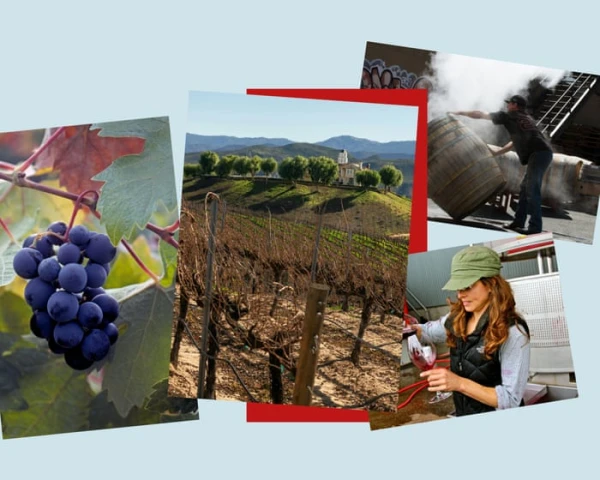
California's wine country unfolds like a living tapestry, where mountaintop vines reach for the sun and vineyards cascade down hillsides in emerald waves. More than just a beverage, wine is woven into the state's very identity—scenting the air with floral berry notes and shaping communities from San Diego to the northern reaches.
"In 20 minutes, you can travel from raw desert with lunar rock formations to towering pines and alpine streams, from fog-covered coastline to bright sunshine dancing across oak-studded hills," observes Melanie Webber, a wine educator with the Wine & Spirit Education Trust. "California truly has it all."
This remarkable diversity—spanning deserts, alpine terrain, and coastal fog belts—enables cultivation of over 100 grape varieties across countless microclimates. The land itself contributes distinct character, from Lodi's celebrated gravel soils to the complex clay-gravel-sand mixtures that yield Napa's world-renowned vintages.
"California was shaped not only by its pioneers, but by its Indigenous people, by its Spanish invaders and waves of migration, its massive cultural diversity and all its sins and successes—melded together into a melting pot of extraordinary winemaking and wines," says Webber.
At the heart of this viticultural wonderland are the people whose determination transformed the landscape. The story begins with 18th-century Spanish missionaries planting mission grapes for communion wine and continues through generations of innovators who challenged conventions.
Napa Valley: Where History Meets Excellence
Napa Valley needs no introduction to wine enthusiasts, having earned global recognition when two of its wines triumphed over French vintages in the legendary 1976 Judgment of Paris. Beyond its celebrated cabernet sauvignons and complex soils, this region north of San Francisco tells a story of cultural convergence.
Buena Vista Winery, nestled on the slopes of the Mayacamas Mountains, stands as California's oldest commercial winery. Its champagne-hued volcanic stone buildings evoke Tuscan villas, while its labyrinthine cellars hold ruby-stained oak barrels that whisper of history.
"Immigration is foundational to the Buena Vista story," explains Brian Maloney, the winery's vice-president of winemaking. "There are layered influences from around the world—Italians and French but also Germans, Spanish, Russians, Japanese, Hungarians, Chinese immigrants who built much of the infrastructure, and the native Miwok and Pomo tribes who identified many sacred spaces here."
This multicultural foundation continued with Charles Krug establishing Napa Valley's first commercial winery in 1861, Italian families like the Battuellos founding vineyards in the early 1900s, and more recently, Mexican-American winemakers forming their own association after honing their craft across the region.
Central Valley: The Engine of California Wine
While Napa Valley produces just 4% of California's wine, the Inland Valleys and Delta region—encompassing Lodi, Madera County, and the San Joaquin Valley—accounts for approximately 75% of the state's production. This agricultural powerhouse benefits from warm, sunny days that ripen grapes and cool nights that preserve freshness.
"The huge range of microclimates and soils throughout the state make it possible to grow any kind of grape and make wine in any style imaginable," notes Doug Minnick, co-founder of the Garagiste wine festival celebrating small-production winemakers. "And there are growers and winemakers—especially small winemakers—who are doing exactly that."
Among the region's standout offerings are Lodi's old-vine zinfandels, harvested from vines over fifty years old that produce wines bursting with character. Each barrel across California's wine regions ferments not just grapes, but stories—blending together to create a rich, complex narrative as endlessly fascinating as the wines themselves.