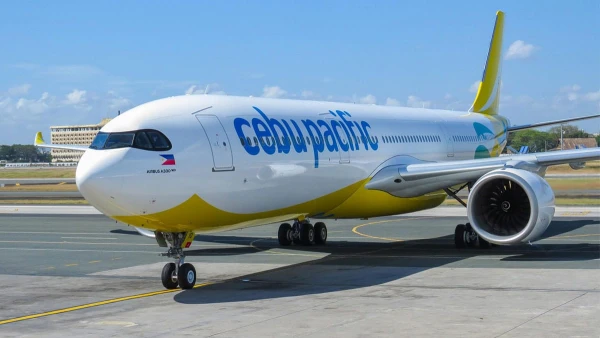
Cebu Pacific is reining in its ambitious target of flying 30 million passengers in 2026 as soaring jet fuel prices – triggered by the Middle East crisis – threaten to dampen travel demand and drive up costs.
CEO Mike Szucs told reporters on Monday that the airline will reassess its growth outlook after initially projecting a rise from a record 26.9 million passengers in 2025 to roughly 30 million this year.
"Well, I think we have to review that. We need to wait and see how that comes through," Szucs said on the sidelines of the inauguration of Cebu Pacific's flagship training facility in Parañaque.
Szucs noted that softer demand could emerge as Philippine consumers begin to "feel the pinch" of elevated fuel prices and higher travel costs.
"It's difficult to predict exactly what the passenger number will be, but certainly, we were on track to grow by sort of 10-percent plus again this year," he added.
Already, allowable jet fuel surcharges have climbed to Level 19, under which additional charges can reach as high as P1,834 per passenger for domestic flights and up to P15,397.15 for international flights.
While the budget carrier said it is still operating as anticipated through April and May, it acknowledged that the outlook for the succeeding months remains uncertain, particularly if elevated oil prices persist into the low travel season.
Despite turbulence tied to the fuel market in the first quarter, Cebu Pacific still managed to increase passenger traffic to 7.54 million from 6.95 million a year earlier, helped by strong travel demand during the school break.
'Tactical adjustments'
"Clearly we've got a few months to go through where we've got to manage incredibly inflated fuel prices. It's our largest cost … and now, of course, it's gone up by more than double," Szucs said.
Jet fuel prices remain elevated at $184.63 per barrel as of April 17, although they have eased after hitting $209 per barrel in the week ending April 3. Before the war, jet fuel prices averaged below $100 per barrel.
The airline said it may implement "tactical adjustments" to its flight schedule depending on how demand and fuel prices evolve in the coming months.
Cebu Pacific earlier suspended its Dubai route until the end of May. It has also paused several international routes – including Davao-Bangkok, Iloilo-Bangkok, Iloilo-Singapore and Clark-Hanoi-Clark – until October.
Despite the near-term pressures, Cebu Pacific maintained that it has adequate fuel supply. In late March, the company said it had secured sufficient fuel supply through the end of June.