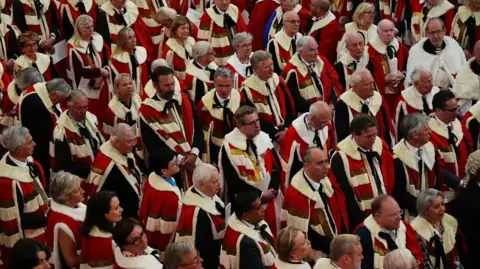
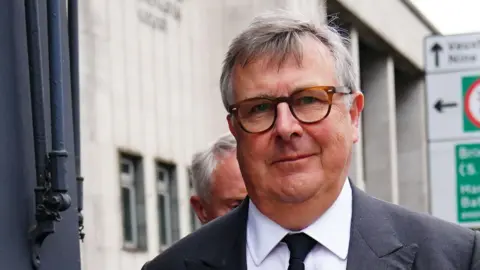
As the Labour government pushes forward with historic reforms to abolish the remaining hereditary seats in the House of Lords, two prominent aristocrats have secured a unique compromise. While they will lose their rights to sit, speak, and vote in the upper chamber, they have been granted permission to maintain their ancient ceremonial duties and parliamentary access.
Edward Fitzalan-Howard, the Duke of Norfolk, and Lord Carrington will continue to serve as the Earl Marshal and Lord Great Chamberlain, respectively. In these roles, the two men are responsible for organizing major royal and state events within the Palace of Westminster, such as the upcoming state opening of Parliament in May.
Behind-the-scenes negotiations began roughly a year ago when the legislation was first being drafted. The peers approached Baroness Smith, Labour’s leader in the Lords, to express their desire to continue managing these historic traditions. Their lobbying proved successful, resulting in official assurances that their ceremonial titles would be protected.
"The ceremonial roles of the Earl Marshal and the Lord Great Chamberlain, as great officers of state, are preserved," a Buckingham Palace spokesperson confirmed, adding that both men will carry on with their duties. House of Lords authorities have also stated that special arrangements will be made to ensure they retain the necessary parliamentary access.
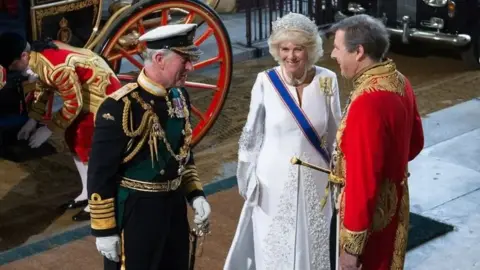
Representatives for both peers indicated that they accept the democratic will of Parliament regarding the broader abolition of hereditary voting rights. A spokesperson for Lord Carrington clarified that while he will be stripped of his voice and vote in the chamber, his responsibilities as Lord Great Chamberlain remain otherwise intact.
The compromise has drawn sharp criticism from anti-monarchy campaigners. Graham Smith, the CEO of Republic, blasted the decision to preserve the roles, calling them "a nonsense" rooted in medieval pageantry. He argued that Parliament should reflect modern British citizens rather than bestowing special status based on aristocratic birthlines.
Despite the backlash, historian Lord Roberts defended the exception during parliamentary debates. He maintained that the two roles are vital to the efficient execution of state duties and argued that allowing the men to retain their formal Lords membership would have simplified their logistical operations on behalf of the Crown.
The position of Earl Marshal, held by the Howard family since 1672, involves overseeing coronations, state funerals, and Parliament’s opening ceremonies. The Lord Great Chamberlain role dates back to the 12th century, with Lord Carrington assuming the post upon King Charles's accession in 2022. Both titles previously survived the initial 1999 purge of hereditary peers.
The final 92 hereditary seats in the House of Lords are slated for complete abolition before the end of the current parliamentary session this spring.