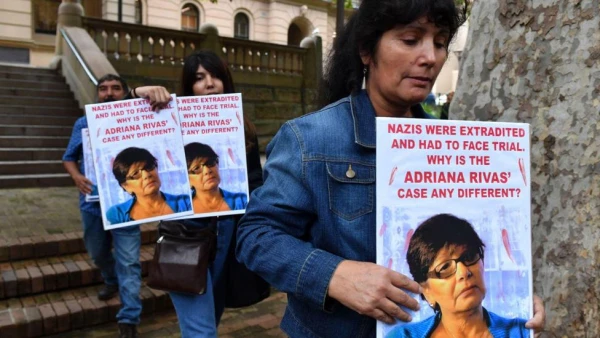
A 72-year-old Chilean woman, accused of participating in kidnappings and torture during the brutal Pinochet dictatorship, has lost her final legal bid to avoid extradition from Australia, where she has lived for decades.
Adriana Rivas, who served as personal secretary to Chile's notorious secret police chief Manuel Contreras from 1973 to 1976, now faces trial in her home country for the aggravated kidnapping of seven Communist Party members in 1976. All seven victims, including a pregnant 29-year-old woman, are presumed to have been killed while in detention.
Chilean prosecutors allege Rivas "took part in the detention... of the victims while she served as guard and in other operative roles."
Rivas moved to Australia in 1978, working as a nanny and cleaner in Sydney's Bondi suburb. Chile first requested her extradition twelve years ago, but she remained free while mounting legal challenges. On Monday, a federal judge dismissed her lawyers' arguments that the extradition request was legally flawed.
A lawyer representing victims' families said relatives were "truly, truly delighted" by the ruling, which could see Rivas returned to Chile within weeks unless she successfully appeals to Australia's full federal court.
During General Augusto Pinochet's 17-year rule, more than 40,000 people faced political persecution and approximately 3,000 were killed. Rivas worked for the National Intelligence Directorate (Dina), the secret police force created by Pinochet to eliminate political opponents after his 1973 military coup.
In a 2013 interview, Rivas described her Dina years as "the best of my life" but denied involvement in torture, stating that "they had to break the people – it has happened all over the world, not only in Chile." Witnesses and rights activists have long alleged she was one of Dina's "most brutal torturers" who played a key role in an elite unit tasked with eliminating Communist Party leadership.
The case gained international attention through a documentary made by Rivas's own niece, filmmaker Lissette Orozco, who spent five years investigating her aunt's past. The film premiered at the 2017 Berlin Film Festival, bringing renewed scrutiny to Rivas's alleged crimes and her decades of refuge in Australia.