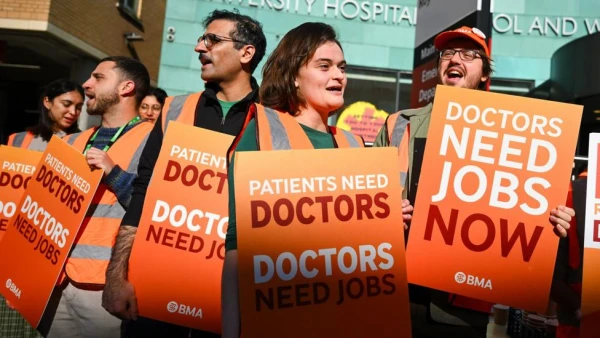
Resident doctors in England have launched a six-day strike, marking their 15th walkout in a prolonged dispute over pay that continues to strain the National Health Service. The industrial action began at 7:00 AM BST on Tuesday and is expected to cause significant service disruptions, with resident doctors—formerly known as junior doctors—comprising nearly half of the NHS medical workforce.
Senior medical staff are being deployed to cover emergency services, but this has led to the cancellation of numerous pre-planned treatments and appointments. The strike follows the collapse of negotiations between the government and the British Medical Association (BMA) in March, leaving both sides at an impasse.
Health Secretary Wes Streeting addressed the public on BBC Breakfast, stating that 95% of appointments remain unaffected and apologizing to those impacted by cancellations. He emphasized that the government negotiated "in good faith" and criticized the BMA's rejection of the latest offer, noting that resident doctors have received "by a country mile the best pay rises in the entire public sector workforce."
However, the BMA contends that despite pay increases totaling 33% over the past four years, doctors' real wages have fallen by a fifth since 2008 when adjusted for inflation. Dr. Jack Fletcher, chair of the BMA's resident doctor committee, expressed regret for postponed patient care but highlighted that such delays also occur outside of strikes due to shortages of specialists and general practitioners.
"The way out of this is to get around the negotiating table, as we were for eight or so weeks, talk constructively to get a deal, to get us out of this," Dr. Fletcher told BBC Radio 4's Today programme.
Dr. Emma Runswick, deputy chair of the BMA Council, added that a deal was nearly reached, but the government "decided to move the goalposts quite last minute to reduce the level of investment they were prepared to make." She asserted that the revised offer was untenable and would have been rejected by members, necessitating further strike action.
The government estimates that each day of strikes costs the NHS £50 million, amounting to approximately £3 billion since industrial action began in March 2023. A Department of Health and Social Care spokesperson described the offered deal as "generous" and expressed disappointment over the BMA's decision to proceed with strikes, prioritizing patient safety and minimizing disruption.
Recent YouGov polling indicates that 53% of the public opposes the strikes, with 38% in support. Among those affected is Adrian Emery, 55, from Nottinghamshire, whose follow-up appointment for medication review after experiencing mini-strokes in January has been canceled twice, leaving him anxious about potential health risks.
"I'm very worried, because my grandfather actually had a very serious stroke. I hope I don't have a full stroke before I am seen," Emery told BBC News.
The dispute escalated last month when the government proposed measures including covering out-of-pocket expenses, accelerating pay progression, and creating additional specialty training posts. However, these offers were withdrawn after the BMA announced strike plans. The government maintains it will not negotiate further on pay, citing the 3.5% annual increase recently granted to all doctors, which raises starting salaries to just over £40,000 and top earnings to £76,500 in basic pay, with potential for additional compensation.
In a related development, BMA staff represented by the GMB union are also striking over pay, seeking better terms amid claims of a 17% real wage decline since 2012. The NHS advises patients with emergencies to use 999 and 111 as usual, while those with scheduled appointments should attend unless notified otherwise, noting that GP services remain largely operational.