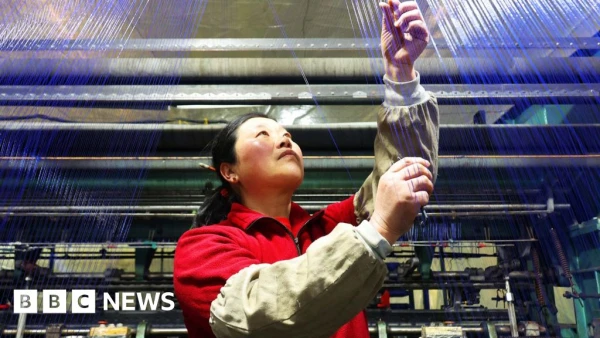
In the bustling industrial zones of southern China, a quiet desperation is growing among factory workers. Under the shade of trees near storefronts advertising temporary manufacturing jobs, laborers share stories of dwindling opportunities and stagnant wages.
"We work and work and have no life," one anonymous worker confided to a journalist, echoing the sentiments of many in China's manufacturing heartland.
These workers represent the human cost of global economic shifts that have transformed Chinese industry from mass production of cheap goods to advanced technology manufacturing. Now, the conflict between the United States, Israel, and Iran is delivering another blow to an economy already grappling with slower growth and unemployment.
While China weathered the storm of recent trade tariffs with surprising resilience—maintaining GDP growth around 5% through export boosts—the Middle East conflict is creating new pressures on factory orders, production costs, and employment.
In Foshan, Guangdong province, opportunities have dwindled to temporary positions paying 18-20 yuan per hour (approximately $2.50-$2.80) for repetitive tasks like plastic molding or phone assembly. Most available workers are over 40, facing mounting uncertainty about their economic future.
"I'm going to try and find work elsewhere," said one worker from a rural province, reflecting the growing frustration among China's industrial workforce.
This economic pressure explains Beijing's urgent calls for an end to the conflict. While China's substantial oil reserves and leadership in renewable energy and electric vehicles have provided some insulation from fuel shortages, the war's disruption of the Strait of Hormuz—a crucial shipping artery—is squeezing an export-dependent economy.
In Guangzhou's massive fabric market, the world's largest, traders report costs increasing by approximately 20%. The textile industry relies on petrochemicals derived from oil, and rising prices are creating difficult choices.
"It means fewer orders," explained one trader during an interview in a backroom office. "Some customers are refusing to pay more, and rolls of fabric are piling up in warehouses."
The contrast with last year's trade war defiance is stark. Where there was once resistance to economic pressure, there's now resignation.
Yet amid the uncertainty, opportunities persist. At the nearby Canton Fair, manufacturers showcase China's technological ambitions to international buyers. Humanoid robots entertain visitors while exhibitors display AI-powered translation glasses, robotic climbing aids, and advanced household gadgets.
Traders note that prices are rising across these products, partly because plastic manufacturing depends on oil. But buyers continue arriving, drawn by China's manufacturing capabilities and its emerging dominance in electric vehicles.
Chinese EV exports reached 350,000 vehicles in March alone—a 30% increase from February and 140% increase from March last year. While Middle East shipments have stalled due to the conflict, manufacturers are pivoting to new markets in Africa, South America, and Asia.
"Last year, 90% of our cars went to the Middle East, but this year we've almost stopped doing business with them," explained trader Joyce Liu. "Some vehicles are still waiting at Chinese ports."
An Omani delegation at the fair represents both current challenges and future possibilities. "We are here to cooperate with Chinese companies," said Zahir Mohammed Zahir al-Kaabi. "It's hard right now, but God willing, the war will finish and business will be good."
Beijing's diplomatic balancing act reflects these economic complexities. While pushing for ceasefire negotiations and engaging Middle Eastern leaders, China must also navigate relations with the United States ahead of scheduled May talks.
"Beijing wants to do whatever it can to secure that meeting," noted Yu Jie from London-based think tank Chatham House.
Professor William Figueroa of the University of Groningen observed that China is "flexing its diplomatic muscle" to demonstrate its regional commitments to both the United States and Middle Eastern partners.
This positioning reinforces China's growing role not just in the global economy but in international power dynamics. Yet for workers like the Canton Fair cleaner who earned 150 yuan ($20) for a 14-hour day cleaning toilets, such geopolitical shifts offer little immediate relief from economic pressures that continue to shape daily life in China's industrial centers.