China's economy demonstrated unexpected strength in the first quarter of 2026, growing at a rate that surpassed analyst predictions despite escalating geopolitical conflicts in the Middle East. Official data released Thursday revealed a 5 percent year-on-year expansion in gross domestic product from January through March, exceeding the 4.8 percent forecast by economists surveyed by Agence France-Presse.
"The Chinese economy achieved a strong start to the year, further demonstrating its resilience and vitality," stated the National Bureau of Statistics in their official announcement.
This positive performance comes against a backdrop of global economic uncertainty fueled by the ongoing US-Israel conflict with Iran, which has disrupted shipping through the critical Strait of Hormuz—a vital passage for approximately one-fifth of the world's oil and natural gas supplies. While China's diversified energy sources have provided some insulation from immediate price shocks, analysts warn that a potential global economic downturn could significantly impact demand for Chinese exports.
Zichun Huang of Capital Economics noted in an analysis that first-quarter growth was primarily driven by external demand, stating: "We think growth will soften a bit over the rest of the year. While the Chinese economy is holding up well, it is becoming ever more dependent on external demand."
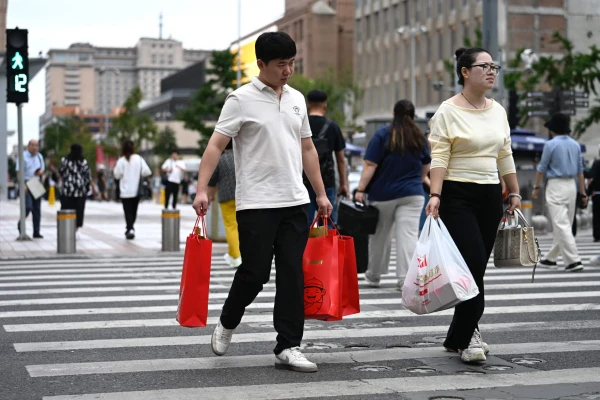
Recent trade data reveals emerging challenges, with export growth slowing sharply in March—an early indicator that Middle East tensions are already affecting international commerce. This development is particularly concerning for Chinese policymakers who have increasingly relied on exports to compensate for persistent weaknesses in domestic consumption and a prolonged property sector crisis.
The International Monetary Fund recently tempered its global economic outlook, reducing its 2026 growth projection for China from 4.5 to 4.4 percent. The IMF cautioned that "the global economy is facing this next test of resilience as signs of unevenness lie beneath the surface," specifically noting that China's "domestic activity—especially in the housing sector—lags behind exports."
Beijing has set a modest 2026 growth target of 4.5-5 percent, the lowest in decades, reflecting the challenging economic environment. Additional economic indicators released Thursday showed mixed results: retail sales grew only 1.7 percent year-on-year in March, falling short of Bloomberg's 2.4 percent forecast, while industrial production increased 5.7 percent, slightly exceeding expectations but showing a slowdown from earlier months.
As global tensions continue to threaten international trade flows, China's economic resilience faces its most significant test in years, with policymakers walking a tightrope between maintaining export momentum and addressing persistent domestic weaknesses.