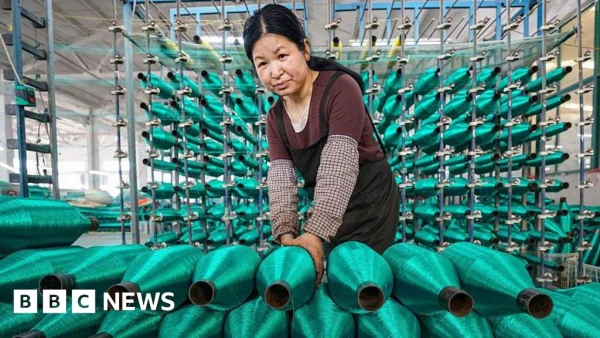
China's economy has outperformed expectations in the first quarter of the year, expanding by 5% despite ongoing global disruptions from the US-Israel conflict with Iran. Official data released this week showed growth surpassing the 4.8% forecast by economists, marking a rebound from the previous quarter's 4.5% expansion.
"The rebound was driven by manufacturing, while the world's second largest economy continues to be weighed down by falling property investment," according to official reports.
This economic resilience comes despite the Middle East conflict that began on February 28, which has severely disrupted global energy supplies and hit Asian economies particularly hard. The growth figures represent China's first GDP release since Beijing lowered its annual economic growth target last month to a range of 4.5%-5%, its lowest expansion goal since 1991.
Kyle Chan, an analyst from the Brookings Institution, noted that cars and other exports were a "major bright spot" in the data. However, he cautioned that "the Iran war's full effects are yet to be seen," predicting that next quarter's GDP figure is likely to be weaker due to trade disruptions caused by the conflict.
China's economic landscape faces multiple challenges, including weak domestic consumption, a shrinking population, and a prolonged property crisis. From abroad, the country confronts an energy crunch due to the Iran conflict and ongoing global trade tensions, including US tariff policies.
Recent trade data reveals mixed signals for China's economic outlook. March export growth slowed sharply to 2.5% compared to the same period last year, marking a six-month low. This slowdown follows combined January-February exports that jumped by more than 20% year-over-year, boosted by strong demand for electronics and manufactured goods.
Meanwhile, China's imports surged by nearly 28% in March, leaving the country's monthly trade surplus at just over $50 billion—the lowest figure in more than a year. Economics lecturer Yixiao Zhou from the Australian National University suggested that "the surge in the value of imports is likely to be due to a rise in costs globally as a result of the Iran war."
Iran's threats against vessels using the crucial Strait of Hormuz shipping route have driven up crude oil prices and the cost of petroleum-based materials like plastics. While China is less reliant on Gulf oil than other major Asian economies like Japan and South Korea, the country is already feeling the effects through rising petrol prices and reduced airline flights as jet fuel costs surge.
Zhou warned that the conflict could further impact China's exports if global consumers become less willing to spend due to higher prices. "Export growth ultimately depends on your trading partners' economies," she noted. "It is hard to sustain that growth at a very high rate continuously."
As China navigates these economic headwinds, the ruling Communist Party continues its efforts to reshape the economy through investments in innovation, high-tech industries, and domestic spending initiatives. The economic performance comes ahead of anticipated diplomatic engagements, with US President Donald Trump and Chinese President Xi Jinping expected to meet in China in May.