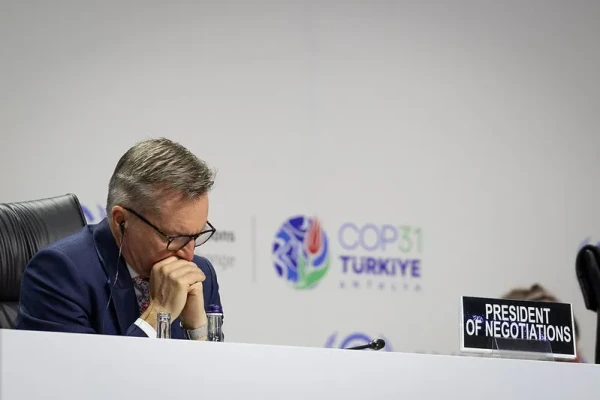
The world’s travel industry is left scrambling after negotiators failed to reach consensus on the Antalya Pact at COP31, a landmark climate agreement that would have set binding targets for electrification, clean energy, and climate finance. The collapse of the deal—rejected by 90 countries including the UK, Norway, and the EU bloc—has left tourism leaders without a critical signal to guide long-term investments in climate resilience.
Critics argue the proposed pact was deeply flawed, omitting any mention of fossil fuels despite their role as the primary driver of global warming. Instead, the text leaned heavily on carbon capture and storage, a technology favored by fossil fuel-dependent nations but dismissed by environmental advocates as a dangerous distraction. "We will not accept a COP that greenwashes fossil fuels," declared Ireland’s climate minister Darragh O’Brien and European Commissioner Wopke Hoekstra in a joint statement.
The absence of a final agreement means the Antalya Pact’s voluntary electrification pledge—aiming for 35% of global final energy consumption to come from electricity by 2035—lacks teeth. While around 80 countries have signed on, the plan remains silent on whether that electricity must be clean, leaving the travel sector in limbo. A recent UN Tourism report revealed that 60% of updated national climate commitments now explicitly include tourism, yet financing for adaptation remains unresolved. The rejected pact had proposed tripling adaptation finance without specifying a baseline year, and solidarity levies—supported in principle by the UK, Spain, Kenya, and small island states—remain under study.
Despite the diplomatic deadlock, the travel industry is pressing ahead with its own climate initiatives. Major players like Iberostar, the World Travel & Tourism Council (WTTC), and the Ocean & Climate Platform have launched the Ocean Catalyst Group to drive sustainable ocean-based solutions. Meanwhile, the Glasgow Declaration—marking its fifth anniversary—has simplified reporting rules and introduced an adaptation pathway to help tourism businesses measure and reduce their environmental impact.
The question now is whether the sector can mobilize without a global framework. With COP32 in Ethiopia on the horizon, the travel industry faces a stark choice: forge ahead with fragmented, voluntary efforts or wait for a unified signal that may never come.
"The absence of a COP31 deal doesn’t stop tourism from acting—it just makes the path harder." — Industry Analyst
As the world’s most climate-vulnerable regions brace for rising sea levels and extreme weather, the travel industry’s ability to adapt will hinge on whether it can fill the void left by failed diplomacy.