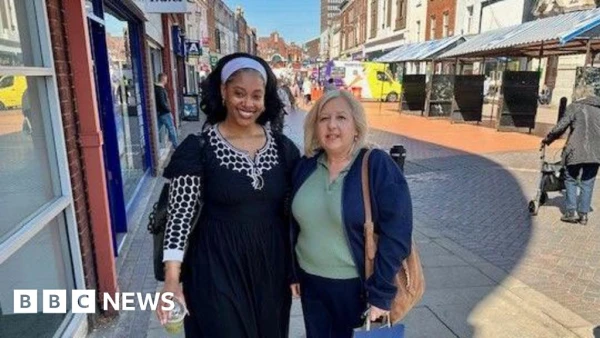
As local elections approach, voters in towns like Walsall express growing frustration over the decline of their high streets, linking the visible neglect to a broader sense of political abandonment.
“It’s not like it used to be,” says Debbie Tapper, a lifelong resident, reflecting on the once-bustling market that has dwindled. “I am proud to be from Walsall. But I’m not proud of the way the country is at the moment.”
The challenges facing Walsall mirror those across the UK: online shopping, out-of-town retail parks, and economic shifts have left town centres dotted with empty shops, replaced by barbers, vape stores, and betting shops.
Polling suggests this decline is fueling political discontent. Luke Tryl of More in Common notes, “The public judge their local area by the state of the High Street. Signs of neglect are seen as symptoms of wider decline.”
Shoppers Sharday Hodges and Carmel Yates echo this sentiment. “It’s really run down,” Yates says, pointing to high rents and parking charges as barriers. Hodges adds, “We used to have such a rich market history and it’s such a shame.”
Efforts to revitalize high streets include government funding and regeneration projects, but many voters feel change is too slow. “The council has their 2040 plan, but if I’ve got to wait until I’m 41 for Walsall to be great again, that’s not good enough,” Hodges says.
The Centre for Cities think tank finds high street vacancies are higher in deprived areas: one in 12 units empty in London and Cambridge, versus nearly one in five in Bradford. “Some high streets are doing well, especially in and around London,” says director Ant Breach. “But in places where people have less money, the local high street has suffered.”
Communities Secretary Steve Reed acknowledges the political stakes. “Fixing high streets is critical to showing people that politics is back on their side.” The government has announced a £301m revitalization fund and a £5.8bn “Pride in Place” scheme. The Conservatives pledge to scrap business rates for retail, hospitality, and leisure businesses up to £110,000 annually, while the Liberal Democrats propose a temporary VAT cut for pubs, cafes, and attractions.
Yet solutions remain elusive amid strained local budgets and economic inequality. As the elections near, the state of high streets may prove a decisive issue.