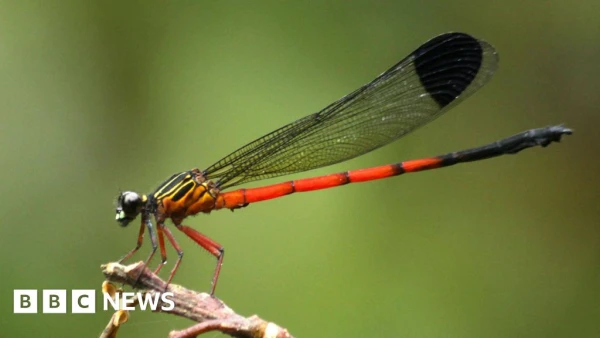
A comprehensive study of dragonflies and damselflies in India's Western Ghats—a UNESCO World Heritage Site—has uncovered a troubling 35% reduction in species numbers, raising concerns about the health of this critical ecosystem.
Conducted over two years (2021-2023) across five Indian states and funded by the government's Department of Science and Technology, the research identified 143 species, 40 of which are endemic to the region. However, 79 previously recorded species were not found, suggesting possible extinctions or extreme rarity.
"Dragonflies and damselflies are excellent indicators of ecosystem health," said lead researcher Pankaj Koparde, an evolutionary ecologist. "A decline in their numbers may signal underlying degradation."
The Western Ghats, a 1,600-km mountain range along India's west coast, hosts over 30% of the country's plant and animal species and at least 325 globally threatened species. But threats such as urbanization, agricultural expansion, infrastructure projects, invasive species, and mining have led the IUCN to rate the region's conservation status as "significant concern" in its 2025 report.
Recent studies have documented similar declines among other endemic species, including a 75% drop in 12 bird species (2023) and the disappearance of rare galaxy frogs following habitat trampling by photographers (2025).
Koparde and his team braved remote, challenging terrain—mossy riverbanks and mangrove swamps—to document the insects. They discovered seven new species, including Protosticta armageddonia, named after the term "ecological armageddon" used to describe catastrophic insect declines worldwide.
The researchers are now building a genetic library of all documented species to trace their evolutionary origins, which may date back to the Gondwana supercontinent. The Western Ghats, formed about 150 million years ago when India split from Africa, are older than the Himalayas.
"The species here could have evolutionary roots in Gondwana," Koparde noted, emphasizing the urgent need for continued monitoring and conservation.