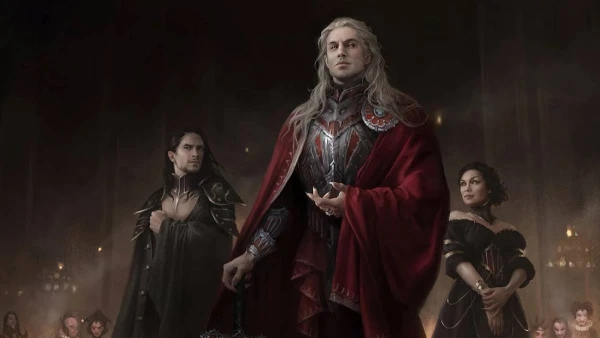
Edgar Markov didn’t just create a vampire deck in Magic: The Gathering—he nearly rewrote the rules of the game’s most popular casual format. For years, his namesake deck, Edgar Markov, has been a thorn in the side of competitive Commander players, pushing the boundaries of power and strategy to the brink of breaking the format entirely.
The deck’s rise to infamy began with Innistrad, Magic’s gothic horror-themed set released in 2011. Edgar Markov, a vampire lord from the set’s lore, became the namesake for a Commander deck that exploited the format’s multiplayer dynamics to drain opponents of resources while growing exponentially stronger. The strategy was simple in concept but devastating in execution: use Edgar’s ability to create vampire tokens, then leverage those tokens to generate overwhelming board presence and card advantage.
“Edgar Markov wasn’t just a deck—it was a phenomenon. It forced the entire community to question what was fair in Commander.” — A competitive Magic: The Gathering player who faced Edgar Markov in multiple tournaments.
For years, Edgar Markov remained a polarizing figure in the Magic community. Some players embraced the deck’s creativity, while others argued it had become too dominant, stifling variety in games. Tournament organizers even considered temporary bans or restrictions, though Edgar Markov never officially broke the format’s rules. Instead, it became a symbol of how a single deck could reshape the meta of a casual, lore-driven game.
The deck’s legacy endures not just in its competitive impact but in its cultural footprint. Edgar Markov’s lore—rooted in Innistrad’s vampire bloodlines—gave the deck a narrative depth that resonated with fans. It wasn’t just about winning; it was about embodying the ruthless, aristocratic vampires of the plane, draining opponents of life and resources in a game of wits and strategy.
Today, Edgar Markov’s deck remains a benchmark for power in Commander. While newer decks have emerged to challenge its dominance, few have matched its cultural and strategic impact. For many players, it’s a reminder that in Magic: The Gathering, the line between genius and tyranny is often drawn by a single card.