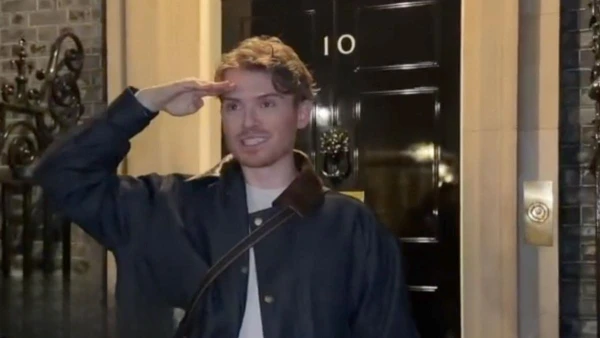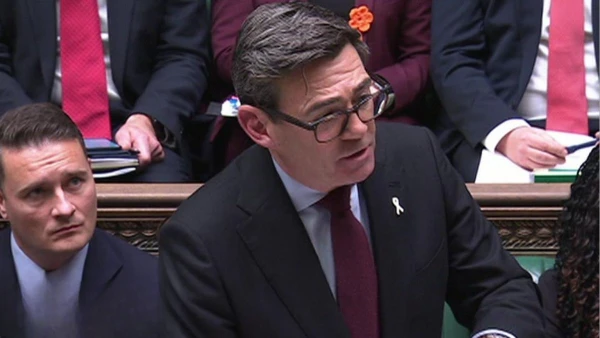
Prime Minister Andy Burnham has come under fire from Conservative leader Kemi Badenoch after inviting dozens of social media influencers to a high-profile reception at 10 Downing Street last month. The event, designed to engage younger audiences with government messaging, has sparked a heated political row after one attendee’s controversial video went viral.
During Prime Minister’s Questions on Wednesday, Badenoch condemned Burnham’s decision to host the gathering, calling it an attempt to "debase his office" by allowing a content creator to film on the steps of Number 10. The video in question, posted by TikToker Max Balegde (who boasts 3.6 million followers), featured offensive language that Badenoch described as "grotesque" and "disgusting."
"Disgusting and pejorative comments about women’s private parts, obscene language that referred to white women as cheap meat—this is grotesque," Badenoch told the House of Commons. "Labour MPs constantly tell us about their commitment to fighting violence against women and girls. Those MPs were silent yesterday. I won’t be."
Balegde’s video, which included the phrase "bomboclaat pussywagon chicken nuggets"—a meme-driven phrase—prompted widespread criticism. The content creator later removed the video and issued an apology on Instagram, stating his content was "meant to be silly, fun, and light-hearted."
"If anybody was offended by that video, I sincerely apologise. Nobody was offended for weeks until revolting right-wing people tried to put this disgusting narrative on it." — Max Balegde, TikTok influencer
Burnham defended his outreach strategy, arguing that influencers are a vital tool for reaching young people who increasingly turn to social media for news. "She sneers at TikTokers, she sneers at influencers," he said, accusing Badenoch of dismissing a generation of digital natives. "I will not apologise for engaging with young people."
The event itself was tightly controlled, with attendees required to surrender their personal devices and use government-issued phones and cameras to record footage. The footage was later shared with the influencers for their own platforms. Artist Sophie Tea, who has over 1.3 million TikTok followers, described the invitation as a "privilege" and a chance to democratize information about government work.
"I believe in the democratization of information," Tea told BBC Radio 4’s Today programme. "Number 10 is meant to represent the whole country, and the more people feel like they belong there, the better."
This isn’t the first time influencers have been invited into Downing Street. Former Prime Minister Rishi Sunak also engaged with content creators during his tenure, and the practice has become a recurring strategy under Burnham’s leadership. However, critics argue that the approach risks trivializing serious governance.
Political analyst Luke Tryl, director of UK think tank More In Common, called Burnham’s strategy "sensible" for broadening outreach but warned it could reinforce perceptions of the prime minister as a "people pleaser."
The row escalated further when Burnham mocked Badenoch’s criticism by referencing the Conservative Party’s own history of lockdown parties in Downing Street during the COVID-19 pandemic, drawing laughter from Labour benches.
As the political fallout continues, the incident highlights the growing intersection of politics and digital culture—a trend that shows no signs of slowing down.