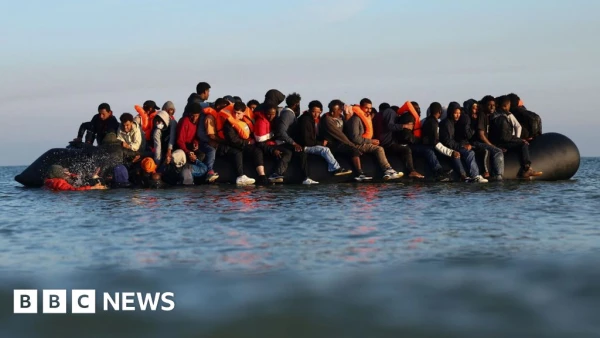
The UK and 45 other European countries have agreed to a new declaration urging courts to give greater weight to national immigration policies, aiming to accelerate the removal of illegal migrants. Signed at a summit in Moldova on Friday, the declaration warns that European democracy could be undermined unless states can respond more effectively to people smuggling and modern migration pressures.
The agreement calls on the European Court of Human Rights in Strasbourg to defer to member states on most migration cases. UK Foreign Secretary Yvette Cooper described the deal as a "common-sense approach" and stressed the need to prevent systems from being "unfairly gamed."
The European Convention on Human Rights (ECHR), drafted after World War II, enforces basic rights across Europe via the Strasbourg court. The new declaration does not rewrite the ECHR—a process that would take years—but sends a political signal to human rights judges to consider public interest and democratic imperatives when deciding migration cases.
Signed by all 46 members of the Council of Europe (separate from the European Union), the document asserts states have "the undeniable sovereign right" to set their own immigration policies and remove foreign nationals in the public interest. Critics argue the wording could weaken human rights protections or have little practical effect, as judges may ignore it.
People Smuggling and Return Hubs
The declaration specifically targets people smuggling, stating it "risks undermining support for and the integrity of the Convention system." It allows countries like the UK to pursue deals with other nations, including creating "return hubs" beyond Europe. Italy has already struck an agreement with Albania to accommodate rejected migrants there; the UK has explored similar options, though no concrete deals have emerged.
In 2023, the UK Supreme Court ruled the previous government's Rwanda asylum policy unlawful due to its failure to treat genuine refugees fairly.
Inhuman Treatment and Family Life
The agreement reaffirms that Article 3 of the ECHR absolutely bans torture but notes that failed migrants cannot avoid deportation simply by claiming they may face inhuman or degrading treatment in their home country. It states courts should not block expulsion solely because a migrant's country has inferior healthcare or social conditions, except in "very exceptional circumstances."
The document also reaffirms the principle that the right to family life does not automatically prevent removal, aiming to reduce legal challenges that delay deportations.