Formula 1's top decision-makers are promising surgical precision rather than sweeping changes as they address growing driver discontent with the sport's new regulations.
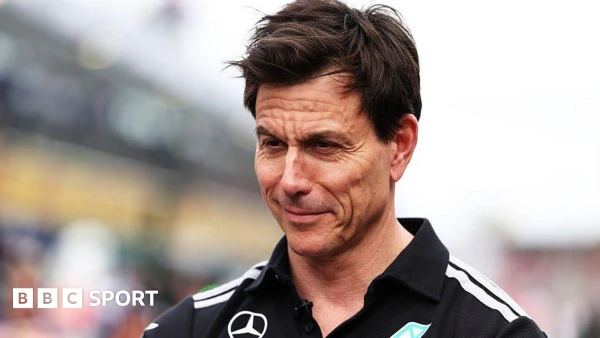
Mercedes team principal Toto Wolff revealed that F1 bosses, team representatives, and governing body the FIA will approach upcoming rule adjustments with deliberate care during a crucial meeting on Monday. Wolff emphasized the collaborative nature of recent discussions, stating that all parties share common goals for improving the sport.
"The discussions that have been taking place between the group of drivers, the FIA, Formula 1, and the teams have been constructive," Wolff explained. "We all share the same objectives. It's how can we improve the product, make it out-and-out racing, and look at what can improve in terms of safety, but act with a scalpel and not with a baseball bat."
The push for regulatory refinement comes after reigning world champion Max Verstappen expressed serious concerns about the current state of F1 following the Japanese Grand Prix. The Red Bull driver went so far as to suggest he might reconsider his future in the sport due to dissatisfaction with the new generation of cars.
At the heart of driver complaints are the 2026 power-unit regulations, which feature a nearly equal split between internal combustion and electrical power. This technological shift has fundamentally altered driving dynamics, requiring complex energy management that drivers argue compromises the essence of racing.
Mercedes driver George Russell highlighted two primary concerns drivers have raised with officials: the elimination of flat-out qualifying laps due to battery recharging requirements, and dangerously large speed differentials between cars during races.
Verstappen's frustration centers on how these changes affect both qualifying and race performance. Qualifying laps no longer represent maximum attack driving, while races are complicated by varying battery charge levels and multiple power modes that create unpredictable speed gaps between competitors.
Wolff expressed cautious optimism about finding solutions that preserve what works while addressing driver concerns. "I am carefully optimistic that we're going to improve the racing, while keeping the racing really good," he said. "If you have aligned objectives, and you define those objectives at the beginning, and that is, how can we work on making qualifying more spectacular, enjoyable for the drivers? How can we tackle safety objectives? And at the same time, protect what's really good within the racing, the overtaking."
With only three races completed under the new regulations, F1 leadership appears committed to evolutionary rather than revolutionary changes, seeking to refine the sport's direction without undermining the progress made in recent seasons.