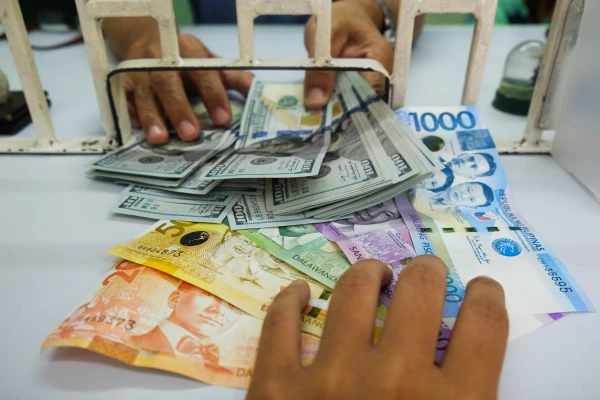
The flow of money sent home by overseas Filipino workers has decelerated to its slowest growth rate in nearly two years, raising concerns about the resilience of this critical economic lifeline amid global uncertainties.
According to the latest figures from the Bangko Sentral ng Pilipinas (BSP), remittances in February increased by just 2.6% year-on-year, reaching $2.79 billion. This marks the weakest monthly growth since June 2024 and represents the smallest monthly inflow since May 2025.
"The 1 percent excise tax on remittance transfers from the US introduced at the start of 2026 under the One Big Beautiful Act may have weighed on remittances and may have pushed some overseas Filipinos to use alternative transfer channels," said Domini Velasquez, chief economist at Chinabank.
The slowdown appears partly attributable to reduced inflows from the United States, which typically accounts for approximately 40% of total remittances to the Philippines. Analysts suggest new tax measures may be influencing how migrant workers transfer funds.
This deceleration comes as geopolitical tensions in the Middle East—a region that contributed about 18% of total remittances last year—threaten to disrupt labor markets and potentially displace migrant workers. The conflict has already rattled global energy markets and prompted warnings from international financial institutions.
Despite these challenges, the BSP maintains its year-end forecast of 3% growth, projecting total remittances to reach $36.7 billion. The central bank notes that there are currently no indications of mass repatriation or widespread deployment bans affecting Filipino workers abroad.
Financial analysts warn that prolonged disruption in the Gulf region could have ripple effects beyond household finances. S&P Global Ratings recently cautioned that Philippine banks might face pressure on loan quality if remittance flows diminish significantly.
"If labor markets in the Gulf are disrupted, it could affect remittances, which could in turn erode deposit growth and repayment capacity in the Philippines," S&P noted in a recent assessment.
Economists point to the countercyclical nature of remittances, which often increase during difficult periods as overseas workers send additional support to families facing economic hardship. This characteristic may help cushion the impact of global economic headwinds on the Philippine economy in the coming months.